The faint aroma of stir-fried cabbage hangs heavily in the air, starkly contrasting the weight of anxiety on security guard Jabulani Ngobese (40) and his romantic partner Thandi Mazibuko (32).
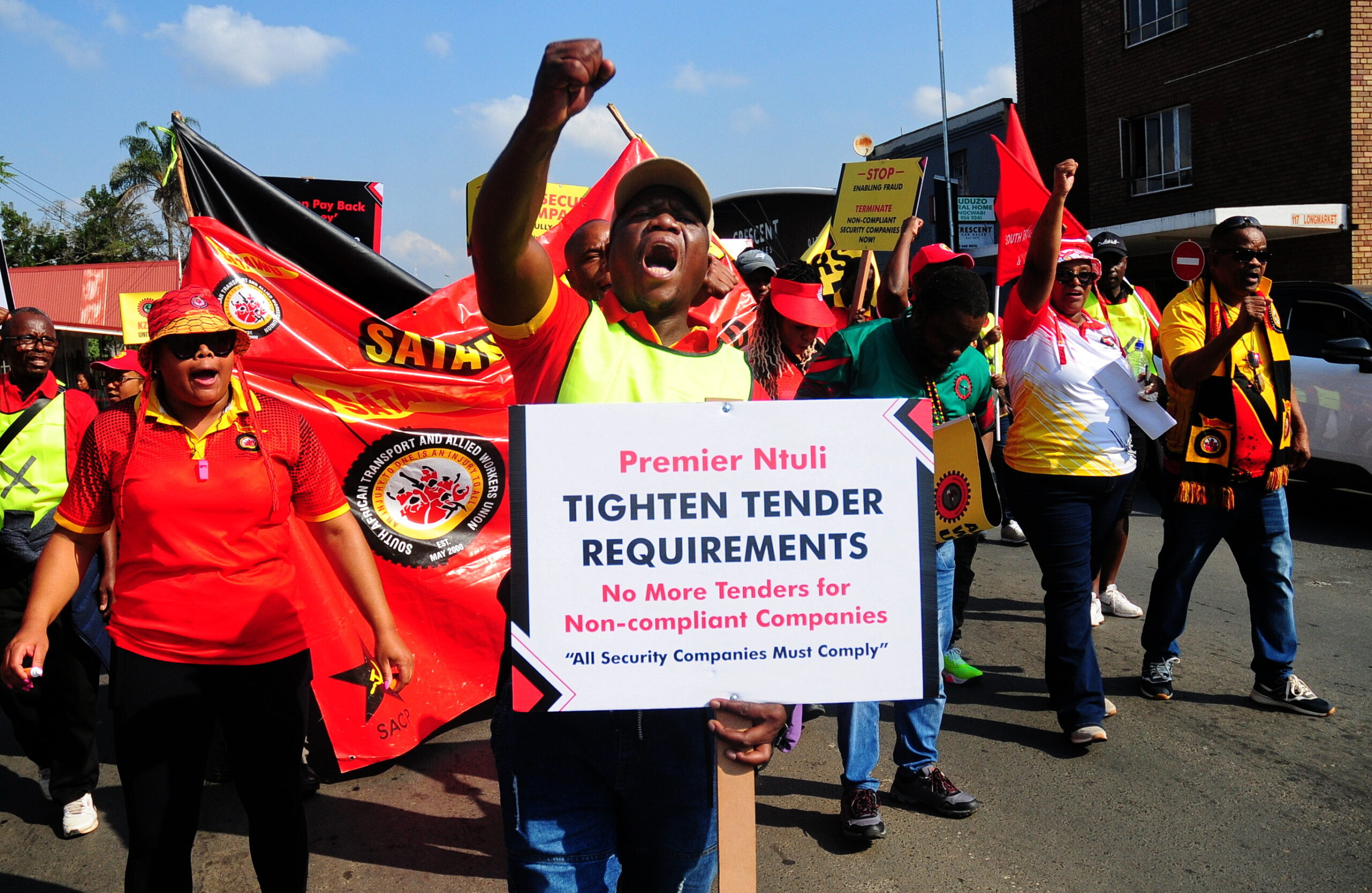
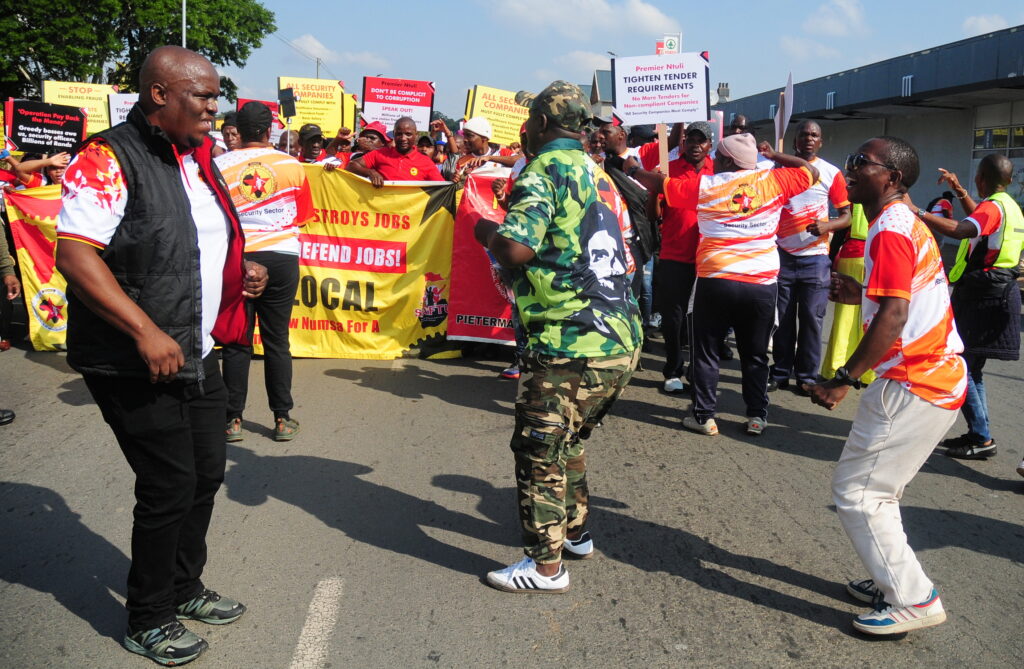
Early this year, Ngobese and Mazibuko joined hundreds of fellow security workers in a march down Langalibalele Street in Pietermaritzburg to deliver a memorandum of demands to the office of KwaZulu-Natal Premier Thamsanqa Ntuli.
Now, back in the stark reality of their meagre existence, the optimism of the protest has begun to wane.
“They heard us,” Mazibuko says, her voice laced with worry, as she sits on the edge of their rickety bed, watching Ngobese.
The single bare bulb casts long, harsh shadows across the sparsely furnished room of their dilapidated flat in the city centre of Pietermaritzburg.
Ngobese sits on a chair, his gaze fixed on the floor, lost in thought.
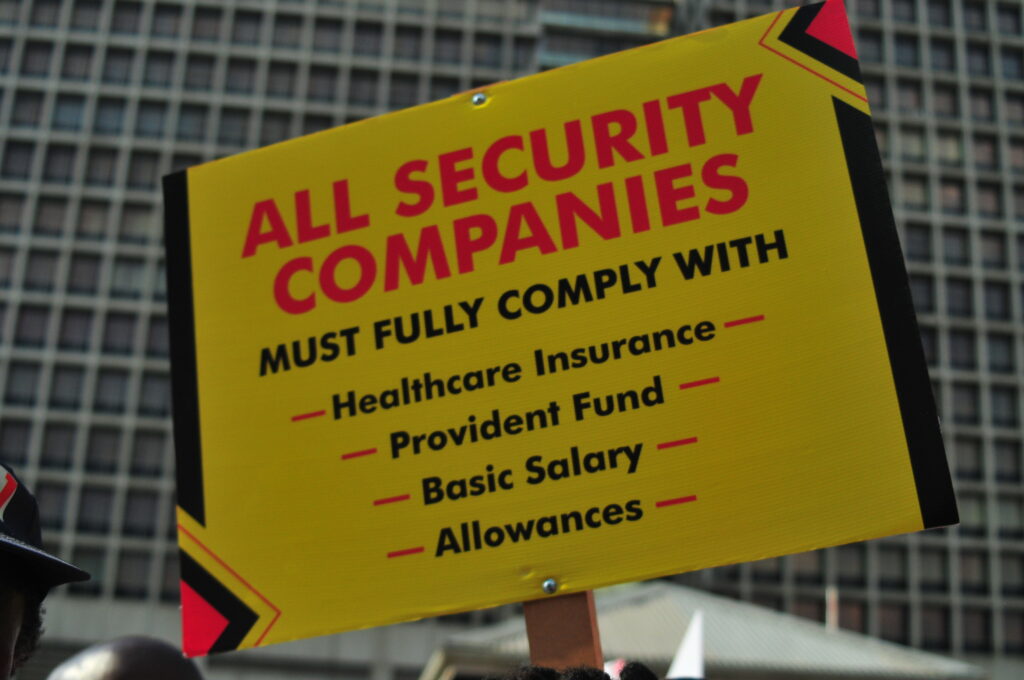
“We were all united, demanding access to health insurance and provident funds for all security guards. That’s why I marched, for a little help. Indlebe nje kuphela (an ear only),” Ngobese clenches his fists.
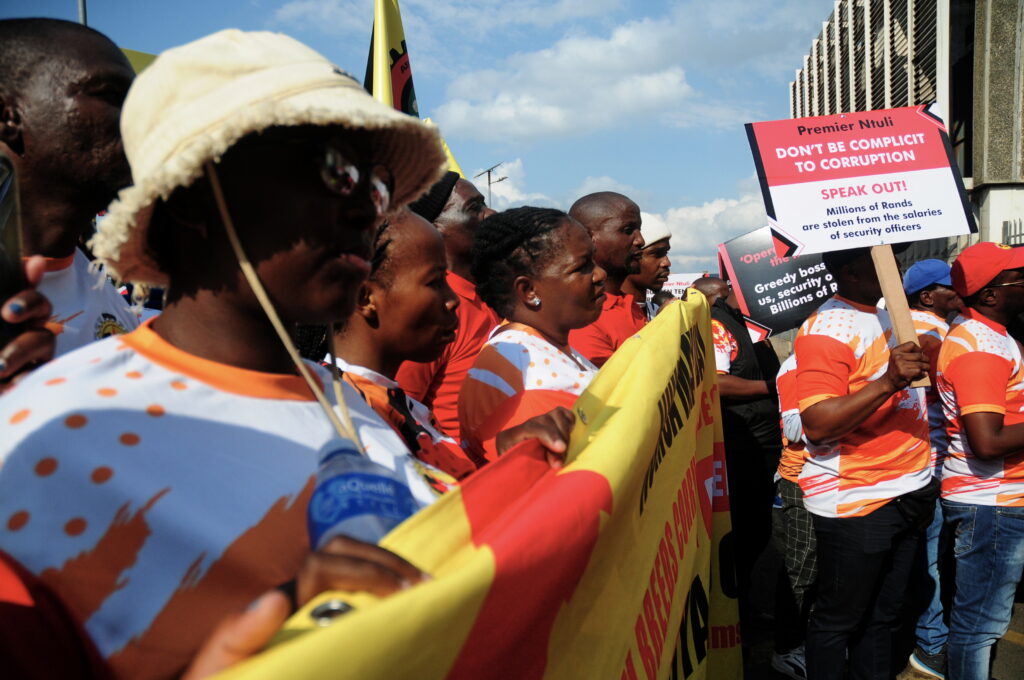
The Abanqobi Workers Union (AWU), the Democratised Transport Logistics and Allied Workers Union (Detawu), the National Union of Metalworkers of SA (Numsa), the South African National Security and Allied Workers Forum (Sansawf), and the South African Transport and Allied Workers Union (Satawu) organised the march. It highlighted the private security sector’s crisis of employer non-compliance, depriving security officers of benefits, basic salary and other allowances.
The protesters carried placards with messages such as: “Premier Ntuli, tighten tender requirements. No more tenders for non-compliant companies.” The demands included terminating contracts with non-compliant companies and revising tender requirements to enforce adherence to industry regulations.
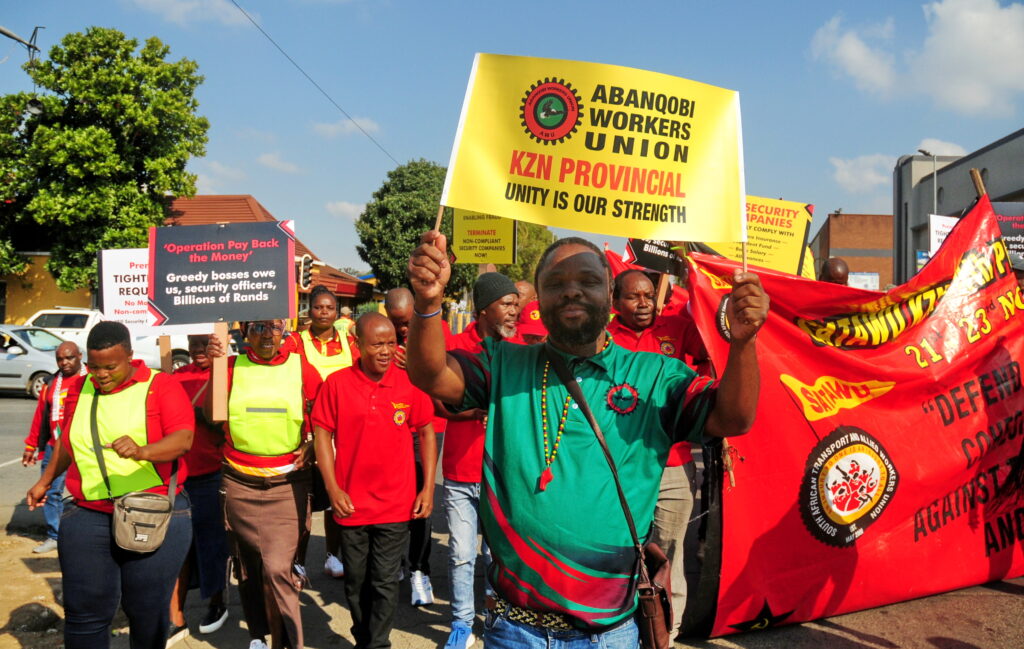
Ngobese and Mazibuko are concerned that their demands are being ignored.
Unions sent a follow-up letter to the Premier urging action to protect the rights and benefits of the more than 90,000 affected security officers after a lack of response to their picket.
“We propose a meeting with the Premier’s Office to discuss the issues outlined in our memorandum in greater detail,” states Zithulise Mqadi, AWU Secretary General.
The unions’ insistence on a meeting reflects a growing frustration with the lack of progress in addressing the crisis.
They believe that a direct dialogue with the Premier’s Office is crucial to developing a comprehensive and effective plan of action.
Experts warn that the situation if left unchecked, could lead to further exploitation, labour unrest, and a decline in the quality of security services provided to the public.
Tony Botes, Security Association of South Africa National Administrator, has added his voice to systemic reform in the sector.
Botes says the private security industry is threatened by non-compliant companies who avoid costs, exploit labour, and use illegal means. These providers avoid paying provident fund contributions, hire unregistered and untrained guards (often undocumented foreigners), undercut minimum remuneration and conditions using labour brokers and independent contractors, and misuse unregistered learnership programs.
Botes argues that non-compliance with labour laws hurts workers and gives unfair advantages to businesses that break the rules.
“Security officers that are underpaid or overworked are more liable to render a substandard level of service, which places the consumer at serious risk,” says Botes.
SA Society of Labour Law National President, Sean Snyman, adds that the provincial government must work with the NBCPSS and PSIRA to develop a more effective regulatory framework.
“Provincial government should also demand proof of payment of these contributions [healthcare and provident funds] and perhaps establish a contractual obligation that if this is not done, the contract with the service provider could be terminated,” he says.
Louis Mkhethoni, President of the Security Association of South Africa, advocates for a more coordinated and proactive regulatory approach within the security sector: “All consumers, including all levels of government, should ensure that their security service providers comply with ALL of the statutory requirements to minimise the abuse of their employees.”
Mkhethoni proposes government intervention to address the security officer crisis by:
Improving PSIRA and the NBCPSS cooperation, to share information related to non-compliance and exploitation of human rights.
Tightening tender requirements, to include proof of letters of registration and compliance, before being appointed, as well as at least annually thereafter.
For security officers like Ngobese and Mazibuko, the march represents a plea for Premier Ntuli to hear their concerns and work with unions to protect them in KwaZulu-Natal.
Mukurukuru Media reached out to the Premier’s office for a response on whether they will be responding to the memorandum by the unions, and if so, when. However they had not done do at the time of going to press.
news@mukurukuru.co.za

Be First to Comment