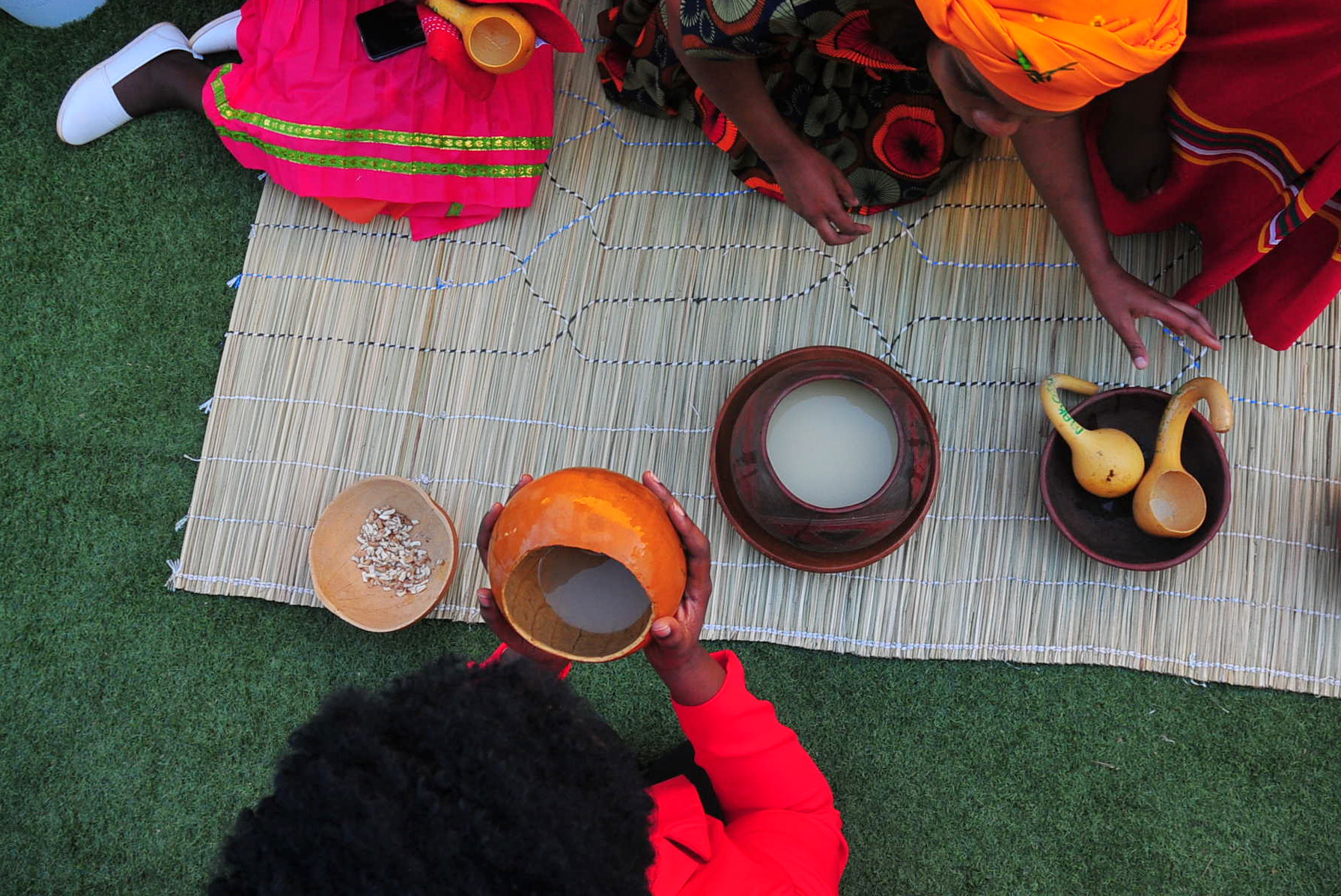
Marula traditional beer brewer Lebo Lebese remembers a time of plenty when decades ago the morula trees grew in abundance in her home district of Lepelle Nkumpi in Limpopo province. Then, she recalled, the rains were good, there was land in abundance and the fruit from the trees was bigger, softer, and much juicier.
While experts classify the marula tree (Sclerocarya birrea) as a resilient drought-resistant crop, marula collectors and beer brewers like Lebese, who are also bearers of indigenous knowledge are worried about the impact of changing weather patterns on the marula, known as ‘the fruit of the gods.’
The South African Weather Services noted that “during the 6-month period from October 2023 to March 2024, somewhat dry conditions, with moderately dry to severely dry conditions in small areas, were experienced mainly in the Northern Cape extending to northern and western parts of the Western Cape, Eastern Cape, the Free State, North West, Gauteng and the Limpopo Province as well as the eastern parts of Mpumalanga.”
The World Meteorological Organisation says the El Niño phenomenon is expected to fuel further temperature increases impacts will continue into 2024 and it will exacerbate extreme weather and climate events, like heatwaves, floods, and droughts.
El Niño occurs on average every two to seven years and typically lasts nine to 12 months. It is a naturally occurring climate pattern associated with the warming of the ocean surface in the central and eastern tropical Pacific Ocean.
“In the past, you pierced one of the fruits, and lots of juice would run down your hands. The fruits were big and contained lots of water. But now there is no rain, the marula we pick now is very small and less juicy,” said Lebese on the sidelines of the launch of the 18th edition of the annual Marula Festival in Polokwane.
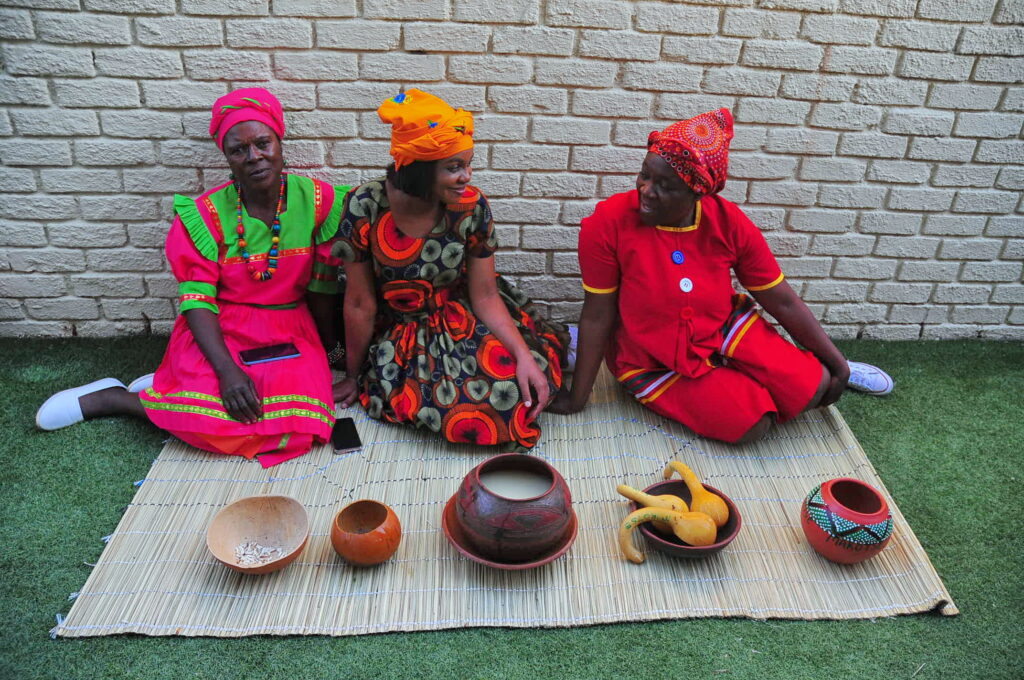
She is a member of the Mmakotse Women’s Club, one of the cooperatives that benefit from brewing the morula beer consumed at the week-long festival that culminates in an open-air music festival in the town of Phalaborwa.
Rodgers Monama, the MEC for the Limpopo Economic Development, Environment and Tourism (Ledet) said during the launch the morula beverage at the festival is prepared by 60 women that belong to 15 co-operatives from all districts of the province.
Monama said this year, the department will procure 12,000 litres of the morula beverage that will be made available at all activities that constitute the festival package.
“We have during the past 18 years witnessed a great entrepreneurial growth within the marula industry with businesses thriving in the production of marula achaar, marula jam, marula peanut butter, marula packaged peanuts, marula soap, marula juice, and lots of marula flavoured meals. These are the products motivated by the preservation of our Morula tree and its marula fruits,” Monama said.
The fruit which is harvested from trees that grow in abundance in Southern Africa and the northern provinces of South Africa including Limpopo, Mpumalanga, North West, and the northern parts of Gauteng ripens between February and April.
Recognising its huge potential, 18 years ago the Limpopo provincial government established the Marula Festival to celebrate the fruit and exploit the economic potential of the fruit.
Monama said R8,1 million has been budgeted for this year’s edition which will include an open-air music festival, a marathon, an open exhibition fare, a gala dinner, and other cultural activities in the town of Ba-Phalaborwa.
The festival injects over R40 million annually into the local economy through airlines, car rental companies, tour operators, hotels, lodges, restaurants, and retailers all benefiting from the surge in demand during the festival.
Monama highlighted that another key feature of the festival is the SMME Flea Market which provides an opportunity for emerging SMMEs, companies, entrepreneurs, and traders to exhibit and sell their products and showcase their brands in a flea market setting to promote their businesses.
He said this year the Limpopo Economic Development Agency (LEDA) will support 30 small business owners at this event.
While the festival brings relief to rural based women who brew beer from the fruit and sell it informally across the province, or like the Mmakotse Women’s Club, who are contracted to supply the brew for the festival, changing climatic conditions and encroachment of land for residential purposes pose a challenge.
A study published in the South African Journal of Botany in March 2022 revealed that an estimated 50% of the earth’s land surface was covered with forests 8000 years ago, as opposed to the estimated 30% today.
“Anthropogenic activities especially agriculture has expanded into pristine lands, to meet human needs in all parts of the world, reducing the area of undisturbed lands. In South Africa, out of the 127 million hectares of total land area, 100 million hectares is agricultural land,” the study titled South African wild fruits and vegetables under a changing climate: The implications on health and economy.
The taking up of previously undisturbed land for residential purposes in rural areas is also impacting accessibility to the fruit.
“Some people take up land and cut down the trees. Some of those who still have the trees on their properties invite us to come collect it, but many cut down the trees,” Lebese said.
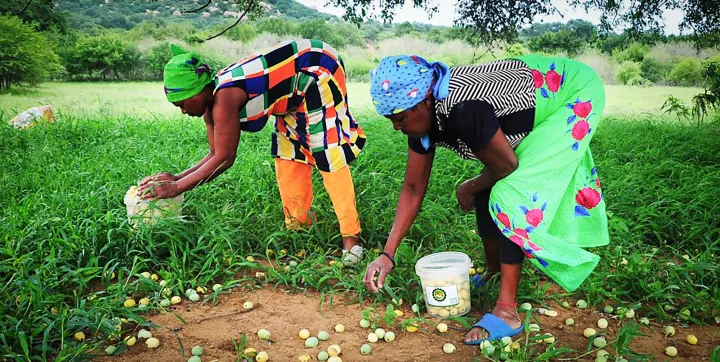
This means now the marula brewers have to travel great distances away from their villages in search of the fruit which drops to the ground once ripe.
“We hire transport to travel and collect the fruit from different areas. We fill up sacks and take the fruit back home,” she said.
In an attempt to mitigate against the challenges, the Mmakotse women planted marula trees on their farm a few years ago. But this has not yielded the expected results.
“We have planted marula trees but they don’t bear fruit. We don’t know what could be the problem. The trees have grown big but they are not bearing any fruit. We don’t know why this has happened,” Lebese said.

A December 2023 paper titled The future of African wild fruits – a drive towards responsible production and consumption of the marula fruit by three scholars from the Universities of Johannesburg, Limpopo, and Namibia; noted that “the recent domestic and international demand for marula fruit-based products has raised sustainability concerns such as over-harvesting, habitat destruction, and unsustainable production practices.”
The authors further advised that “given these challenges, a responsible and inclusive approach to marula production and consumption is required to meet the nutritional needs and sustainably contribute to the socioeconomic development of these communities.”
Lebese’s colleague Kgadi Kganyago advices that though the marula grows in abundance in different parts of the province, harvesting requires an intricate understanding and application of Indigenous Knowledge Systems (IKS).
“In our area [Mmakotse] we find marula in February. That is the time it ripens there. That is when we start harvesting and collecting. Then later on the trees north of us start ripening and the fruit falls to the ground which means they are ready for collection. You need to know when exactly to start preparing to collect and in which area,” explains Kganyago.
Scholars M Masekoameng and MC Molotja support this knowledge of IKS as a valuable tool in food security in a study The impacts of climate change on household food security: The case of Mogaladi village in Sekhukhune District, South Africa.
“Rural people have, for many years, relied on IKS in terms of ensuring food security. For example, they always knew when to plant which types of food, how to plant them, when and how to harvest and process the food, how to preserve the food, and therefore, ensuring food security at all times.
“Their ability to identify different types of edible wild fruits, vegetables, and roots from their local natural resources and their use thereof is IKS which has been passed on from generation to generation. Through IKS, rural people have always been able to ensure food security even under mild changing climatic conditions because they had to rely on local coping strategies.”
Experts note that the marula tree has been a feature of southern African life, culture and customs for over 10 000 years. Hopefully, despite the threat of global warming and changing social dynamics it will continue to bless communities for many more years. – news@mukurukuru.co.za

Be First to Comment