
As the Investing in African Mining Indaba and the Alternative Mining Indaba get underway in Cape Town on Monday the Mining Affected Communities United in Action (MACUA) reminds all stakeholders that every deal that is struck over the next couple of days – will be inked in the blood, sweat, and tears, of mining affected communities across the continent writes Meshack Mbangula.
In South Africa, the mining sector and the politicians go into 2023 without any clear transformational objectives in place and without any clear plan from the DMRE and the Portfolio Committee on how they intend to remedy the legal lacuna that exists in the transformational objectives of the mining sector, after the High Court in Pretoria struck down the Mining Charter in 2022.
Despite both the DMRE and the Portfolio Committee reacting after the judgement by claiming that they [are] in favour of “parliamentary processes to review the transformative legislative framework to advance the transformation objective”, both parties have thus far failed to provide a clear programme for this urgent intervention.
As we have pointed out to the Portfolio Committee and the DMRE before, the current legislative framework of the mining sector points to the extensive unlawful behaviour of powerful actors which ultimately serves to maintain the Status Quo and Deepens Inequality.
MACUA has presented the results of our own research -(which remains undisputed by all stakeholders) -which indicate that there are three core themes which have emerged from the surveys, and physical verifications done by MACUA.
These are, an unwillingness by mining companies to consult with mining affected communities as key stakeholders and update them on the progress of projects that are due to be implemented in their communities, and a general lack of a developmental approach by mining companies in general; widespread non-compliance by mining corporations who have legally binding obligations to implement local economic development projects within host communities and, a lack of political will by the Portfolio Committee on Mineral Resources and Energy and by the regulator (the Department of Mineral Resources and Energy) in terms of oversight and compliance monitoring.
In total, 2673 surveys were conducted across the various mining affected communities. We found that none (0%) of the mining companies completed their SLP commitments within the 5 year SLP timeframe; none of the mining companies we audited undertook a process of public participation in the communities, in order to formulate a social and labour plan; 92.4% of the respondents did not know what a social and labour plan is.
The surveys also found that 95.7% of the respondents have never been consulted by a mine operating in their community on the formulation of an SLP; 96.2% of the respondents had never seen an SLP before; only one (2%) project out of 50, across all of the SLPs audited, was specifically catered to woman empowerment and aimed directly at improving the lives of women.
We also found that only (40%) of the mines we audited have their current SLPs available on their websites as required by regulations, only (50%) of the companies have their current SLPs published on their websites.
Our key findings were that environmental issues such as air, land and water pollution which impacts on human and livestock health, soil and water quality were not adequately dealt with by the law , the mines or by the regulator; communities are living in an unsafe environment, relating to blasting close to houses and the tremors experienced as a result of blasting, as well as concern about the rising crime levels within communities.
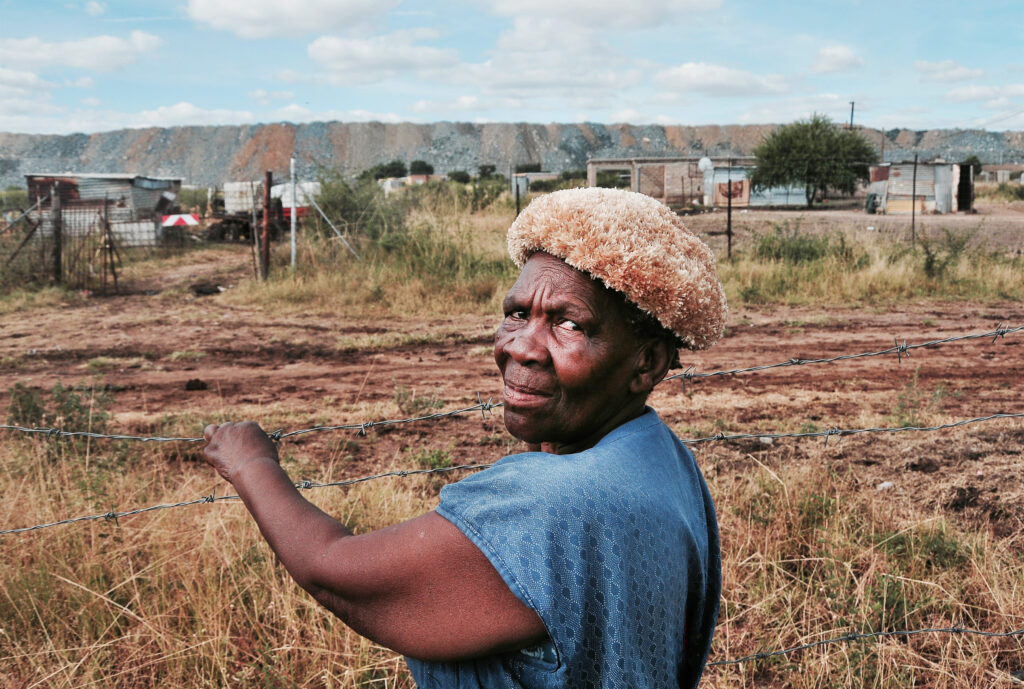
Communities face a constant threat to their health ranging from TB and HIV to skin rashes and infections, asthma, silicosis and chest and lung problems. We also wish to remind the Portfolio Committee and the DMRE that according to the annual PWC reports, government takes approximately 24% of value reported among the listed JSE mining corporates; employees (which includes management) takes 47% of value reported and shareholders take 29% of value reported.
Community investments by contrast has only amounted to 0.9% over the same period (Mincosa says 0.15% of Sales). Between 70 – 90% of the benefits of SLP projects are not accruing to communities.
We call on the Portfolio Committee to immediately set out a legislative programme that urgently fast tracks the inclusion of Binding Transformational and Developmental objectives into the MPRDA.
The opportunity for communities to provide input throughout the law/ policy-making cycle (before the written comments stage) as a core stakeholder and, enhancements to the manner in which broad public participation processes are conducted including proper notice of public participation meetings (nature of meeting, time and venue communicated more than a week before the meeting)•
The inclusion of specific targets and elements for women within the transformation objectives of the MPRDA demand urgent accountability from the Minister of Mineral Resources and Energy (Gwede Mantashe) for his lack of oversight of the DMRE in advancing the transformation of the mining sector.
(We) demand urgent accountability from the Department of Mineral Resources and Energy, for its failure to uphold the law and to comply with regulations of the MPRDA. There can be very little doubt that the mining sector remains largely untransformed and that the sector only pays lip service to objectives of the MPRDA to ensure that “holders of mining rights contribute towards the socio-economic development of the areas in which they operate in”.
MACUA maintains that a Mining Charter (with proper stakeholder engagements from communities and with binding implications and penalties and with open and transparent auditing processes ) is the most practical way to work towards collective targets for transformation.
Current Legislative accountability measures are vague(does not provide targets and reporting standards ), with inadequate penalties or consequences for non-compliance with no transparency requirements and are not enforced.
Mines and the State have a historical, ethical and legal obligation to ensure the social and economic welfare of all south Africans and mines carry a specific obligation to the people who are directly impacted by their mining operations.
We support the call for a Transformation Council that includes community, labour, industry and the Department, so that all parties can meet quarterly to discuss transformation in a structured and consistent process.
We reject the claim by MINCOSA that the problem is merely a lack of standardized reporting, Instead our research shows that there is a fundamental lack of focus on the developmental objectives. This can only be remedied if the MPRDA is more explicit in its intentions to ensure transformation and if there are severe consequences for non-compliance together with greater transparency and rights afforded to communities.
Meshack Mbangula is the national co-ordinator for the Mining Affected Communities United in Action (MACUA)

Be First to Comment