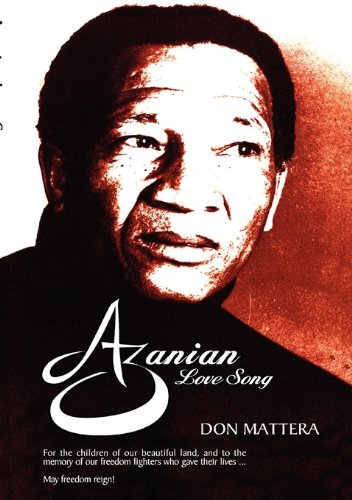
Poets don’t die,they live forever in the words of verse-maker Matt Starking. South African literary giant, poet and journalist Don Mattera’s heart ceased to beat this week at the age of 87. Abdul Milazi, a poet and journalist inspired by the verse from the pen of this great son of Azania looks back on decades of inspiration
THE rain drizzled at a steady pace as I made my way to the Bree Street taxi rank in the heart of the hustle and bustle of Johannesburg. The puddles in the street merged with one another, running ahead of me as if to lead the way.
There was a slight chill in the air, a friendly reminder from the heavens that winter was around the corner. The year was 1995 and the whole country was still intoxicated by our new democracy and Nelson Mandela’s dancing and his colourful Mandarin collared shirts.
Anxiety and excitement took turns tying knots in my stomach as if competing to weave a welcome grass mat for my first day at The Sowetan, where I was starting my new job as a labour writer on April 3, which was a Monday.
I felt like I had dodged a bullet, because if April 1 was not on a Sunday, I could have easily begun my new job on April Fools Day, which might have been a bad omen for an ambitious 28 year-old who still wanted to go places.
In the three years that I had worked at The Star, I had never had a chance to do a story in the Newclare and Bosmont suburbs, so I wasn’t familiar with the area. As I boarded the taxi, I asked the driver to let me know when we got to 61 Commando Road as it was my first time going there. He gave me a toothed smile and asked if I was going to the “newspaper”, and I nodded my response.
He asked me to come sit in front so that he doesn’t forget, and I obliged. He gave me a running commentary like a tourist guide as the taxi followed the road as it flowed in meanders through a maze of new and antiquated houses.
“This is Brixton,” he said and proceeded to give me a little history of the area. I was fascinated by his intricate knowledge and his intriguing anecdotes that he threw in to spice up his commentary. People started getting off as soon as we turned into Commando Road, all of them saying “thank you driver” as they alighted.
I found this courtesy interesting as I had never witnessed it anywhere else. Soon it was my turn and he stopped and glanced at the big Sowetan signage and back at me with a smile, as if to ask “do I have to tell you that this is your destination?”
I smiled back, alighted and said “thank you driver”. The building looked a bit like a small factory compared to the monstrosity that was 47 Sauer Sreet, the place I had called work for my first three years in the City of Gold. As the security officers were signing me in, a voice behind me called my name in full. I have always been called Abdul and never Abdullah, even by my parents.
I turned to find a man with a beaming smile, and a black and white Palestinian traditional scarf draped casually over his shoulders. It was Don Mattera.
“Brother Abdullah, welcome,” he said pumping my hand in a hearty handshake and patting my right shoulder with his left hand.
“Thank you, Mr Mattera,” I replied sheepishly.
Here was the man who made me fall in love with poetry as a teenager, shaking my hand like we were long lost friends. The man I regarded as a poetry God, and aspired to one day be half as good as he was in painting emotional pictures with words and capturing life’s joy and pain with a simple stroke of the pen.
I had no words, and found myself blurting out: “Like a tall oak I lift my arms to catch the wind with bruised fingers and somewhere in the ghetto a child is born; a mother’s anxiety and pain hide in a forest of hope.Like a straight pine I point my finger at God counting a million scars on my dreams and somewhere in the ghetto a child is weeping; a woman writes her legacy on leaves of despair…”
These were the first two stanzas from his famous poem Azanian Love Song, the first of his pieces that I had stumbled upon in 1984 when I was still in high school. I knew the whole poem by heart. I was transfixed to the spot where I stood, unable to move.
Without missing a beat, he said: “The willow stands in silence its tired arms extended to the shallow waters of a dying lake\Its trunk covered in scars inflicted by the hand of malicious hearts that brought their loved ones to enjoy the tranquility to reach out to nature to find themselves to find peace in the leaves blowing in the wind…”
If heaven existed, I felt like I was in it at that very moment. The great Don Mattera had just recited a stanza from one of my poems that had been published in the now defunct literary magazine called Staffrider. I had submitted it as a 15-year-old boy still finding his voice in the world of poetry. My mind was refusing to acknowledge what my ears had just heard. I was later to discover that Mattera had the memory of an elephant, he never forgot a thing he had read or a person’s name and face.
Even though we had not met before that encounter, he recognised me from my picture bylines in The Star. As we made our way towards the reception area, it was like I was sleepwalking through everything. As we entered, he announced me to the ladies at reception, after greeting them all by name and asking after their health.
He was that kind of soul, with a heart as big as the galaxy, and everybody was important in his eyes. He took me to the newsdesk, pointed out where his office was, in case I needed help. He was a writers coach at the publication at the time. He checked up on me several times that day, just to make sure I was okay. That was the beginning of a great friendship and mentorship that has lasted 27 years.
He shared with me tales of his life as a gangster and also of life in exile. One particular story that had me in stitches was how he used to fleece hostel men in the game of cards and dice. He drank milk while the other man drank alcohol, and the drunker they got the more money he won off them. He said the hostel men used to call him “Mathand’ubisi” which is isiZulu, meaning “the one who loves milk”.
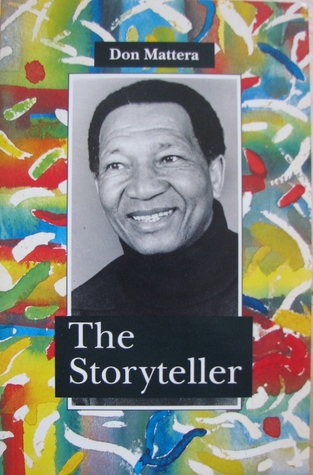
Being a gangster who didn’t drink alcohol or smoke cigarettes, and with milk as a drink of choice over soft drinks must have seem very strange to those men, but Mattera has always been his own man, independent of mind and free of spirit.He was never too busy for anyone and gave freely of his time. I remember eight years after leaving The Sowetan, I was launching my poetry reading sessions in Rosebank in 2003, and I needed a big name to anchor the event.
I called Mattera and asked if he would do me that honour, and he didn’t hesitate to offer his time. As the great storyteller that he was, he held the crowd spellbound with tales from his book Gone With The Twilight: A Story of Sophiatown.
He made the evening a memorable one. The following year we reunited at 61 Commando Road when I was appointed editor of Sunday World. At the time he was working on a new book The Moon is Asleep: Poems of Love and Longing and he gave me the manuscript to look over and copy edit.
I found myself back at that first moment of our meeting, dumbfounded and lost for words. How could I, a mere mortal, begin to fix the masterpiece of a poetry god. I took the copy reluctantly and was as captivated by it as I was with Azanian Love Song. All I could do was just fix typos and the usual literals. I asked him if I could make a copy for keepsake before giving it back to him and he agreed. That manuscript holds pride of place in my home library, encased in a special glass box.

Be First to Comment