Last updated on 9 June 2026
The International Congress and Convention Association (ICCA) has taken aeons to return to Africa. Unfazed by the irony, the association is blowing its trumpet, giving itself brownie points for taking its 66th congress to Africa, in Kigali in October of 2027.
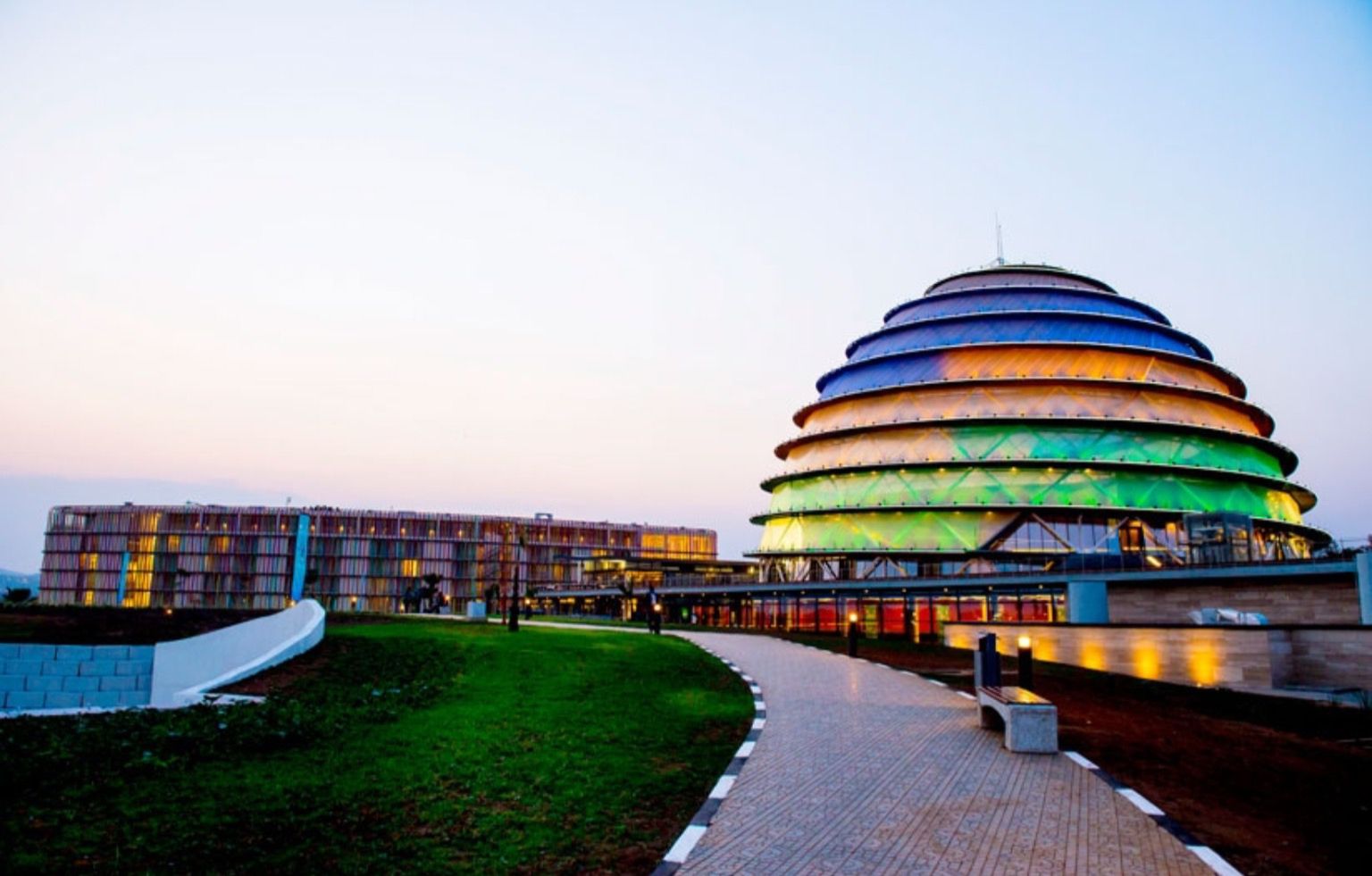
Business events are the hilly city’s staple. So, the news is nothing special. Had the Rwandan capital wanted to, given a chance, it could have easily hosted any two editions of that congress – congregating about 1,500 people – since the end of Covid-19. This underlines the teeming compact city’s state of readiness.
In fact, the continent has plenty in that category. Look at Kampala, Accra and Abidjan. Add Lagos, Luanda and Johannesburg to the list. Thus, instead of ICCA lauding itself for shunning Africa for a quarter of a century, it should concede its bias.
Only then can it talk about affirming previously-excluded communities or regions. This extends to any corporate citizen. Thus far, the association has taken multiple editions of its congress to Europe each decade.
That is wrong, but it helps by way of branding Europe. Going to Kigali in 2027 is right, but not a favour. Also, why did ICCA make its first trip to Africa, Cape Town in that case, in 2004? Expect no explanation.
Keeping to the Great Lakes, aviation analyst and publisher Derek Nseko asserts Uganda’s rude health.
“International conference activity is rising,” he notes. “The tourism product is diversifying beyond wildlife alone. The MICE conversation is gaining maturity. Even the tone of policy discussions feels more commercially aware than it did several years ago.”
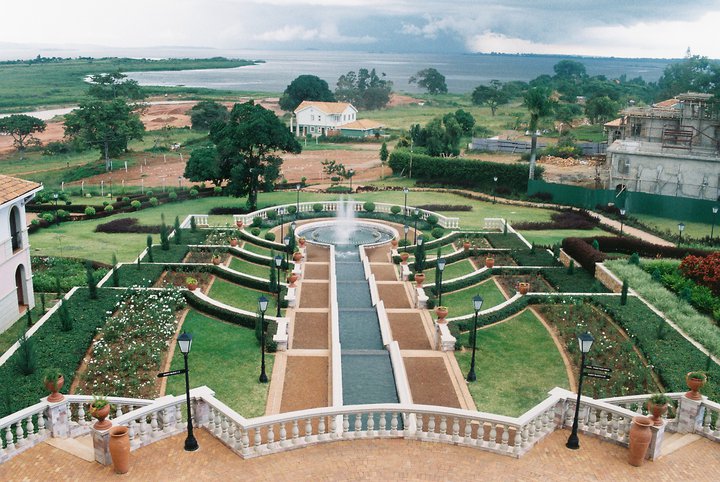
Nseko, a pilot with many hats, was a panellist at the Pearl of Africa Tourism Expo (Poate). The expo – held in a lakeside town named Munyonyo, a few miles north of the equator – in turn congregates tour operators, artists, hoteliers and investors from 40-odd countries to sample Uganda’s infrastructure, natural beauty and other aspects.
“The energy felt larger. More confident. More commercially aware. More urgent,” Nseko says, recalling this year’s Poate (pronounced Powateh).
The speaker lineup on the agenda was spot on. Alas, such discussions often end up in boardrooms. Cue silos and schisms. Time to make the circle bigger. Maybe it’ll reach students and academics at Mbarara, Ibadan and Rhodes; tour guides in Adawa, Elmina and Kilwa Kisiwani; conference organisers and policy makers in Beijing, Brussels and Juba; tourists in Libreville, Paris and São Paulo; and others.
This year’s edition of Poate took place under the baton of Juliana Kagwa, the newish CEO at the Uganda Tourism Board. Her predecessor, Lily Ajarova and her deputy, Bradford Ochieng, stand out for laying a solid foundation. So, the 2026 expo gives Kagwa “a visible first-year win” but also “a first-year leadership examination in full public view,” writes CEO East Africa.
“The next test is whether UTB can convert this momentum into sustained demand, higher-value visitors and measurable progress… in tourism inflows.”
The new chief, a highly trained cosmopolitan leader, would do well to oversee a few more new signature international conferences and events to yield thousands of business travellers. Then there’s the deepening of Uganda-EU ties. Also, it’s about time Uganda hosted a global gastronomy fest.
For the record, the conference sector is firing on all cylinders in Africa. Look at the green Kigali and verdant Kampala of many hills or, further afield, Algiers and Brazzaville. Addis Ababa is a premier diplomatic and business meetings hub.
Cape Town is the finest venue for academic and business conventions. eSwatini’s spanking new, world-class ICC will only make the sector even more competitive in Southern Africa. Apart from instances like Nigeria, in a matter of one year, establishing and shutting a standalone tourism ministry, under Lola Ade-John, Africa is looking up.
ICCA’s bias thus takes us to the maths behind GlobeWatch ranking of host cities. Meetings, incentives, conferences and events, or MICE, drive tourism. The international conferences sector’s business-card effect explains how gatherings brand host nations, subtly turning some business visitors into holidaymakers.
The skewed venue choice thus dilutes Africa’s chances. While ICCA ought to be equitable by virtue of its remit, it is yet to close the host-city gap. Pity. What’s worse is that the dearth, or exclusion, of African host cities as meeting venues is widespread.
Even the United Nations props up the Global North. For one, Europe will host COP 31, likely to attract 50,000 people, in November. This will be the 15th time that Europe hosts the rotational COP, the UN’s Framework Convention on Climate Change, compared to Africa’s five times.
Rotating events, or the soccer World Cup, have a transformational effect. The recognition of any host city is symbolic, but there are also tangible and immediate benefits, such as forex.
Beyond those points, the sector is well-placed to foster regional collaborations, buoy inter- and intra-trade, and, in the case of COP gatherings, say, raise awareness about issues like drought, rising sea levels and a list of other vulnerabilities.
Still – despite their numeric significance, half a billion people in 20 countries – West and Central Africa regions have never had the opportunity to host the world’s largest climate change conference. Like its southern cousin, East Africa has hosted it once.
That returns us to the question pondered by delegates at Poate: is Africa missing in action or being overlooked? Ask the UN. Rotation is a throwaway line.
If it weren’t, Africa would host no fewer than two COP editions per decade. Added to showcasing host territories, even to the millions of people following the event on TV, the business-card effect, these events bring a thick slice of GDP. Look at Davos, host of the World Economic Forum’s annual meeting.
Davos generates € 65 million each January when the WEF meeting swings by in winter. The sum exceeds € 100 million when the rest of Switzerland is factored in.
As an aside, Swiss media reported that the United States delegation once paid a hotel bill of €390,000 in St Gallen, and signed a €1-million car rental contract. The sums are huge and the human-developing legacy voluble.
Global entities, including the UN, known for its inconsistency and uneven distribution of opportunities, must be called out for their tokenisation of Africa. Kampala and Nairobi stand up.
Will African leaders from Bassirou Diomaye Faye, Yoweri Kaguta Museveni and Netumbo Nandi-Ndaitwa to King Mohammed VI and their peers in Asia, Europe and beyond take global entities to task?
Let the students in economics, media, politics, science and other fields at Cairo, Cape Town, Makerere, Roma, UCAD, Wits and every other institution also rise and, through tourism-centred diplomacy and economy, build an Africa they want – the land that Thomas Sankara dreamed of.
To tap the realm of possibilities, when will Côte d’Ivoire, Gabon, and Senegal bid to host COP? Citizens should be asking governments, academia and the private sector.
Have Nairobi and Durban, as previous COP hosts, put their names in the hat of late? Ethiopia, Rwanda, Uganda or – near the Sahel – Algeria, Nigeria and Cameroon could also do it. If governments are slow or lazy, as they often are, where is the private sector to take charge?
Back to ICCA’s GlobeWatch: had Africa been treated equally, why wouldn’t its cities have claimed a bigger slice of the pie? That, after all, is the metric the surveyors are using. Regardless of the prevailing bias, African nations must double incoming tourist traffic.
Bidding for more MICE opportunities is an avenue. East Africa punches below its weight in MICE and leisure categories. At last count, Uganda tallied 1.3-million tourists, in the league of Ghana and Senegal, according to data collated by the UN World Tourism Organisation.
Excepting the likes of Chad and Malawi (a nation prone to very high ministerial turnover) – with each scraping south of a million arrivals – tourist numbers are on the rise.
But that’s off a very low base. There is some context. The Great Wall of China reportedly drew about 15-million people each year to Paris’s 25-million. The latter exceeds the whole of West Africa’s inbound traffic. Overall, Africa welcomes north of 80-million visitors each year.
However, that pales into insignificance when you look at France’s lively 100-million. Time for a paradigm shift.
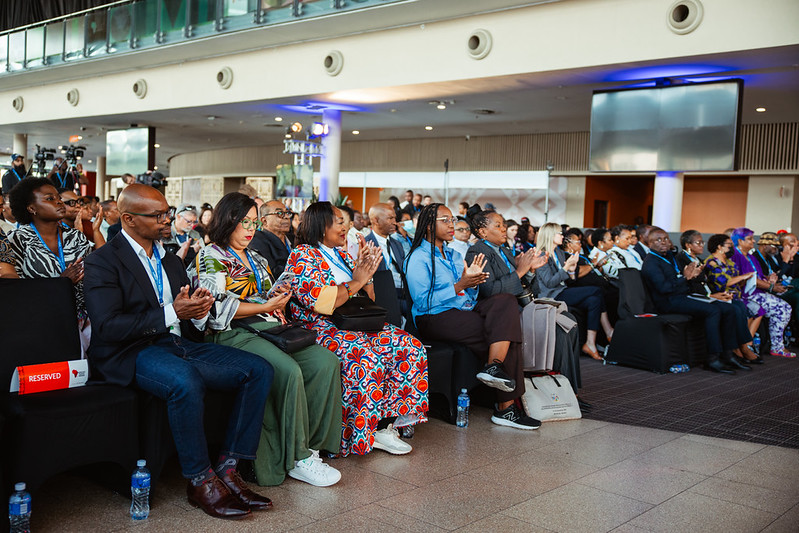
Some of these points made it to this year’s Poate, which drew about 2,000 people, including visitors from 40 odd nations. If the delegates enjoyed their time, they’d be back.
Anyway, what’s there not to like about Uganda? But the expo – like Afcon (set to come to East Africa next June) – is a bridge. It’s not a destination. Government and the private sector must join forces to grow Uganda’s own timber: double arrivals for two years in a row, consolidate for another two. Repeat.
That’ll bring 6-million visitors per annum before Kagwa’s fifth anniversary. Diversifying the offering and adding signature meetings will help. Uganda, like some of her peers, underwhelms partly due to lazy and perennial overreliance on wildlife and waterfalls. We haven’t even touched on cuisine, filmmaking or heritage.
To the southernmost tip, in Durban, Africa’s Travel Indaba does the same by bringing together industry players from across the continent and the globe each year.
According to South African authorities, almost 10,000 delegates turned up for Indaba in May. The expo added US$ 51 million in tourism expenditure and sustained 1,100 jobs for the coastal city. Abroad, WTM London, which calls itself the world’s premier trade show, congregates nearly 50,000 people per year.
The show adds £ 200 million (US$ 270 million) to London’s economy and maintains thousands of jobs. Broadly, WTM generates an estimated £2.8 billion in contracts. It is worth reflecting on how much Uganda or each nation has realised from their investment.
Whether in Egypt, Ghana, Kenya, Mali, Mauritius, Nigeria, South Africa or abroad, taxpayers must pose such questions lest such events become a cool jaunt for those sent as representatives.
Finally, how much the MICE sector adds to the GDP is the easiest part. What’s more critical, but often left unsaid, is that business events accelerate training, foster regional collaborations, and stimulate various areas of the economy, sometimes across borders.
The sector is a PR and branding exercise, a forex earner and a practical catalyst for change, for shared growth. It just has to be used right and make the circle bigger. Time for a shift. – news@mukurukuru.co.za

Be First to Comment