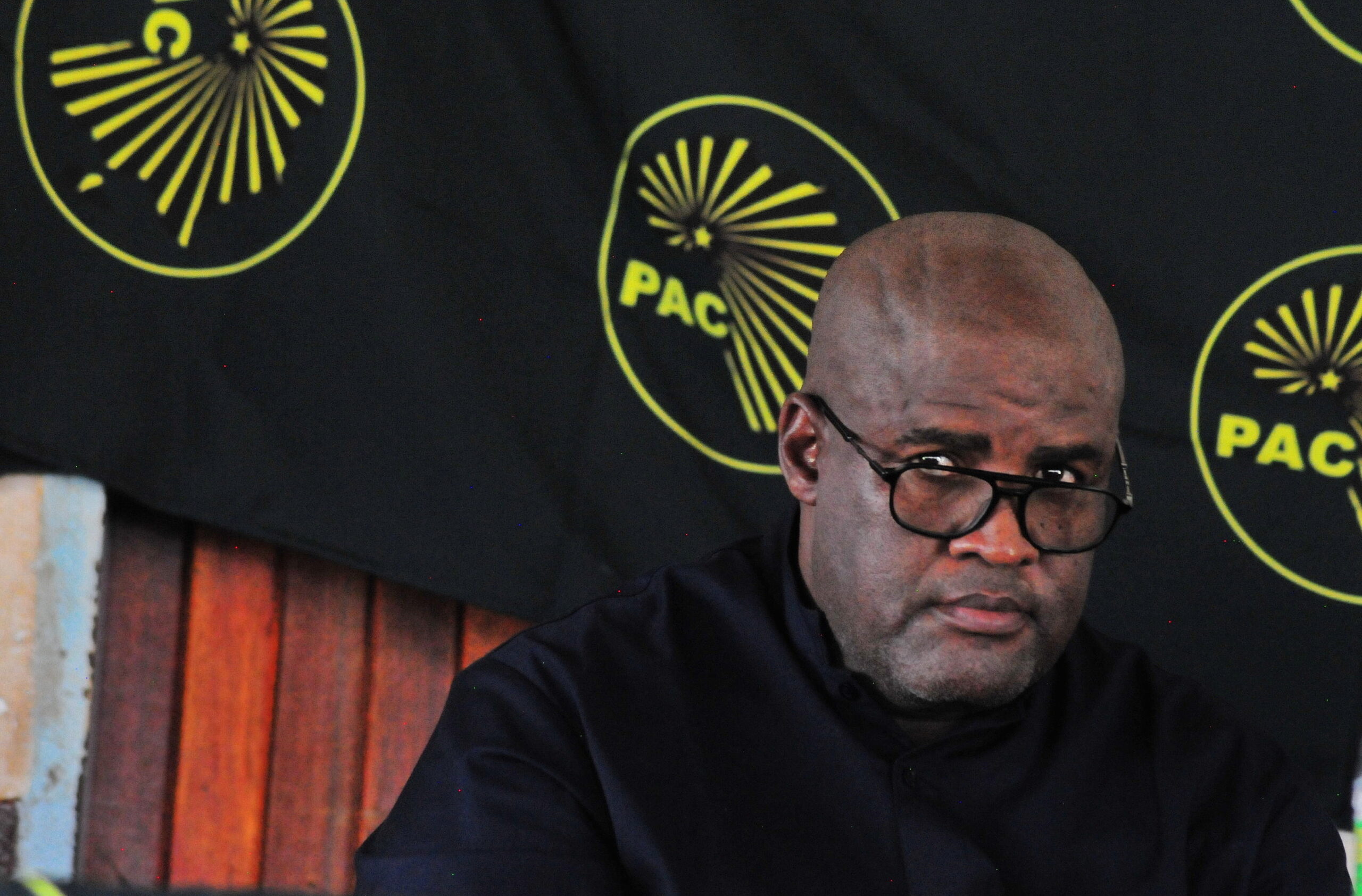
As South Africa heads to the polls in May the PAC of Azania hits the campaign trail hoping to garner enough votes to help them reverse the adverse implications of land dispossession which has been the party’s focus since its founding more than 60 years ago. Lucas Ledwaba caught up with party president Mzwanele Nyhontso on the sidelines of a literary event and asked him about his meeting with Jacob Zuma, elections and the thorny issue of land.
PAC president Mzwanele Nyhontso remains mum on what former president Jacob Zuma told him during their meeting which was sparked by the former state president’s public statements over election rigging – but says he got “all the satisfactory answers regarding everything we spoke about.”
Nyhontso met with the former ANC president who is now the face of the newly formed Umkhonto we Sizwe party at his Nkandla homestead in January.
The meeting raised eyebrows among some PAC members and the general public questioning whether the party was going into coalition with Zuma and his uMkhonto we Sizwe brigade.
But Nyhontso told Mukurukuru Media on the sidelines of a book launch event by his predecessor Letlapa Mphahele in Limpopo that the meeting was necessitated by statements Zuma made in public regarding the fairness and transparency of the electoral process.
Zuma, who was ANC president from 2007 to 2017 and was also state president from 2009 to 2018, caused a stir in January when he questioned the transparency and fairness of the elections.
His statements were interpreted in some quarters as meaning that as former head of state he could know something untoward unfolding during the ballot counting process.
The Sunday World reported in January that Zuma had told the All African Alliance Movement in Soweto: “We are going to the elections soon and there are people who believe the elections will be rigged. Some have information that the counting system will be changed to advantage a particular party. Where is the truth?”
“Maybe because they say majority rule has the right to change laws, we should change the voting system. Why is there so much secrecy in our voting system? Especially the counting that is done behind the scenes? Why is the counting not done transparently in front of everyone?”
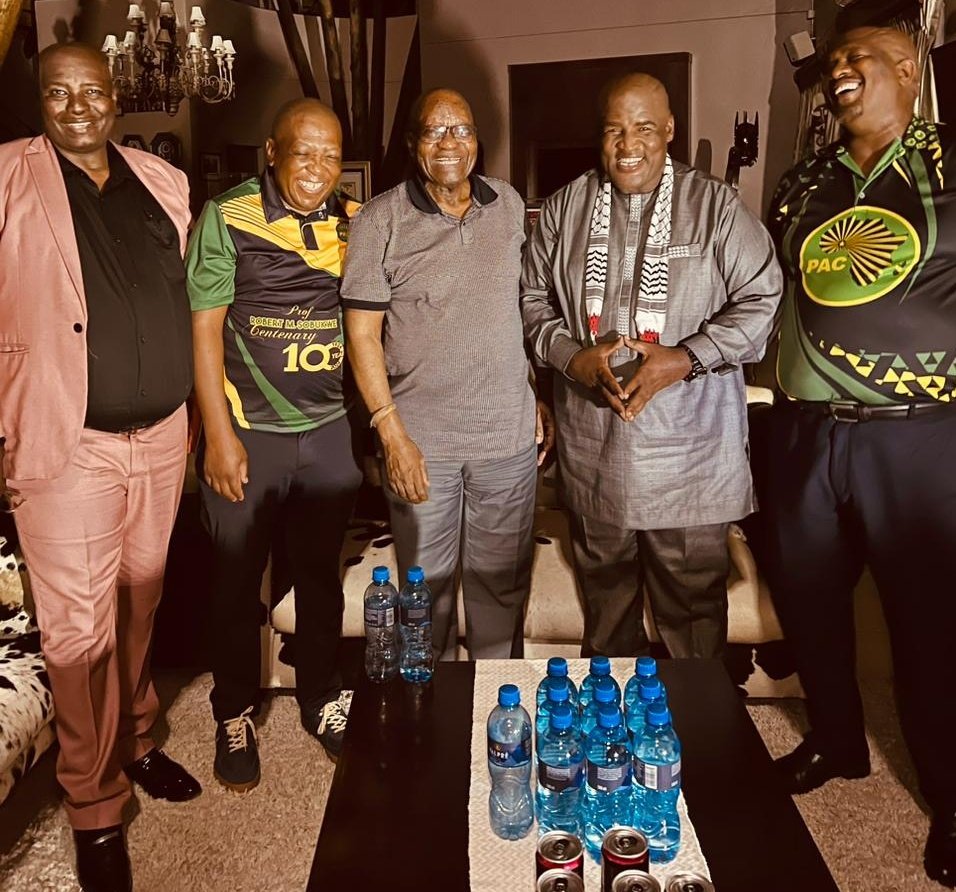
The PAC commented on a twitter picture of the meeting saying: “In a significant meeting at eNkandla, PAC President Mzwanele Nyhontso and former President J.G Zuma united in their view. They stressed the importance of Africans working together to address critical issues: land restitution for dispossessed Africans, combating inequality and economic exclusion, and eradicating poverty, which disproportionately impacts Africans. Unlike previously, there should not be any vote rigging in the next National elections and further engagements will continue.”
A former head of state questioning the authenticity of the electoral process is not unlikely to go unnoticed, and seems to have found resonance among opposition parties including the PAC. Nyhontso said these remarks by Zuma were among the reasons he met with him.
“I personally met Jacob Zuma as the former state president of the country, and I wanted to understand some issues around the time when he was the president and some issues, because remember he alleged in one of his addresses that elections are rigged in South Africa,” Nyhontso told Mukurukuru Media on the sidelines of a book launch by former PAC president Letlapa Mphahlele in Limpopo at the weekend.
“So it [the meeting]was the best platform for me to go and understand from him [Zuma] how are we rigged because in that rigging, PAC has always been a victim since 1994,” he said.
The PAC secured five seats in the first democratic elections in 1994 after amassing 243,478 votes. After the 1999 and 2004 elections the party returned to parliament with only three seats, which dropped to one seat after the 2009 general election. The PAC currently has only one seat in parliament which has been the case since the 2009 elections.
When asked if the meeting had revealed anything significant, particularly about the question of election rigging, Nyhontso said: “No, no, no. I got satisfactory answers regarding everything we spoke about. I’m happy and I’m looking forward to the second meeting.”
He dismissed suggestions that meeting with Zuma raised questions about the PAC’s credibility.
“We are going to meet with Jacob Zuma. We are going to meet with everyone who says ‘PAC president, let’s come and talk. It would be politically incorrect for a leader not to accept meetings. In fact, how are you going to know the item in the agenda if you don’t attend the meetings?” argued Nyhontso.
“We don’t have a coalition with MK. We don’t have a coalition with anyone. We only have a cooperation agreement. Now, as time goes on and as the elections approaches, we know there will be a lot of these meetings. Definitely, PAC will form part of coalitions if there’s a need for coalitions.
“But those coalitions must be informed by what the PAC stands for. They must be informed by PAC principles. We won’t just go into a coalition. It’s our position that [coalition] should be about addressing the problems of the African people.”
The party is set to launch its 2024 elections manifesto on March 2, in Orlando, Soweto, where it was founded in 1959 after breaking away from the ANC over ideological differences that have remained a point of contention between the two parties since.
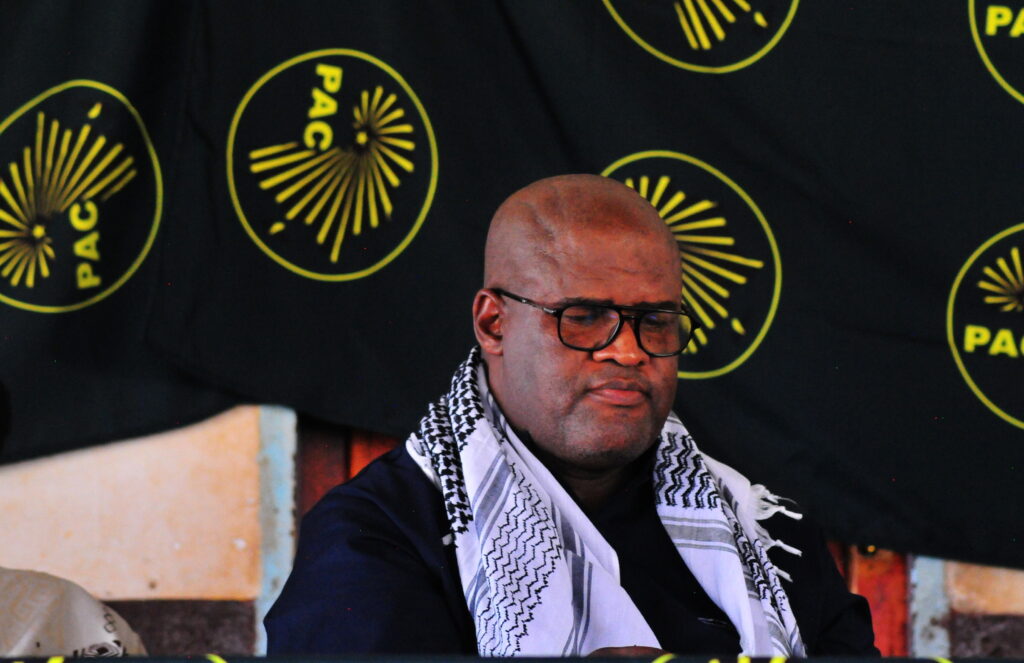
“We have officially kick-started, our campaign. We are all over. We are taking [the] PAC to the people. This time we are no longer participating in elections as we used to do. This time we are contesting elections,” Nyhontso said.
He said rural development remains at the centre of the PAC’s agenda.
“Rural development will always be at the centre of our agenda because we are a party of land and revolution. We must focus on the agrarian reforms and also land, and mineral resources,” he said.
Nyhontso took a swipe at the land claims process which has been dogged by challenges that have resulted in a huge backlog.
In May last year, a meeting of the parliamentary portfolio committee on agriculture, land reform, and rural development heard that 82 976 land claims were settled and finalised by 31 March 2023.
Minister Thoko Didiza said in the department’s 2022/23 annual report that “almost 94% of land claims lodged in 1998 have been successfully settled, benefiting 2,3 million people who now own 4 million ha(hectares). An additional R22,5 billion has been spent on financial compensation for those beneficiaries who opted for financial compensation.”
Didiza however acknowledged that “there are areas of land reform where acceleration is needed, including finalising the old order claims, concluding on labour tenants, claims and addressing the governance in the administration of land under landholding of Community Property Associations.”
In May 2023 chief land claims commissioner Nomfundo Ntloko-Gobodo in her presentation to parliament revealed that there was a total number of 6571 outstanding claims from 1 April 2022 to 30 November 2022.
Nyhontso dismissed the land restitution process as a circus.
“That one is a circus. It’s not a backlog, it’s a circus. It is land that is allocated to comrades. It is land that is given to ANC card carrying members. It is land that is given to a faction close to the ruling elite of the ANC. That’s not a land question. Land question is bigger than that,” he said.
Nyhontso argued that most of the challenges facing the country today, from the zama zama scourge, unemployment, gross inequality, poverty, and unemployment are all manifestations of the unresolved land issue. He said the PAC’s solution to the land problem in South Africa is land restoration and land repossession.
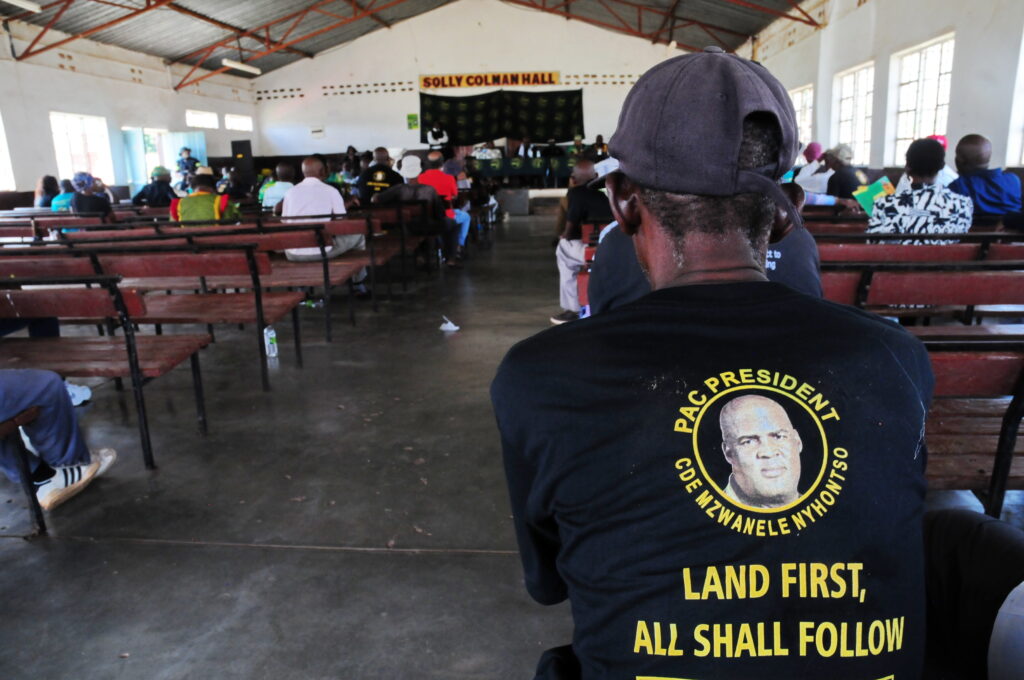
“Once we repossess the land and restore it to its rightful owners, the indigenous African people, then all problems, whether they are problems of restitution, whether they are problems of willing buyer or willing seller, whether they are problems in Section 25, whether they are problems of the liberal so-called expropriation with or without compensation, it doesn’t matter.
“But the land repossession and land restoration remains the key element to resolve the land question in Azania [PAC’s name choice for South Africa),” he said.
But how does the PAC plan to deliver on the land issue?
“Firstly we must deliver the land through an act of parliament. That’s why we must campaign and they must give us numbers, they must give us members of parliament, they must give us a voice and through that voice, we must take land.
“We must deliver the land through the act of parliament, which is a legal means. But if that does not, succeed, our land was taken through the barrel of a gun. And it must be returned through that barrel if they cannot give us,” he said. – news@mukurukuru.co.za

Be First to Comment