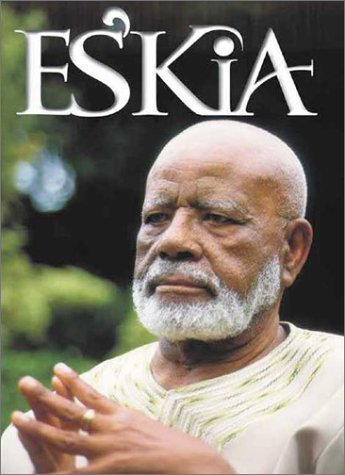
The University of South Africa recently hosted the 14th Es’kia Mphahlele Memorial Lecture in Polokwane. Malesela Maubane reflects on proceedings
On Monday 16 October 2023 – we walked Down Second Avenue, second time around with Professor Tinyiko Maluleke, Tshwane University of Technology (TUT) Principal and Vice Chancellor.
The occasion was the 14th Es’kia Mphahlele Memorial Lecture (EMML2023) organised by the University of South Africa (UNISA).
The lecture was organised under the theme The African writer as a prophet and social critic in contemporary times.
Prof Mphahlele is an alumnus of the university, having obtained a master’s degree with distinction from the institution. Thus in her welcoming address UNISA principal and vice chancellor Prof Puleng LenkaBula rightfully indicated that Mphahlele did not outsource his thinking.
Reflecting on the current democratic epoch and in contrast with Mphahlele’s protest writing, there is truth in Prof LenkaBula’s words.
“As we celebrate our democracy, we need to engage the fault lines that Mphahlele would have reminded us to be the most important issues, lest we are fooled by this ideal democracy if it does not have economic transformation,” she said.
Prof Maluleke’s lecture centred around Mphahlele’s 1957 memoir Down Second Avenue, a portrayal of his early life as a black South African and growing up in a segregated country.
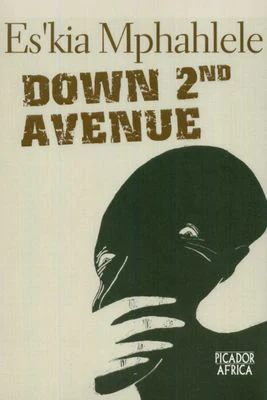
Although he was born in Marabastad in the year 1919, Mphahlele was uprooted from the Pretoria township in 1924 aged five and taken to Maupaneng in Ga-Mphahlele, to live with his paternal grandparents.
On this, Prof Maluleke quoted Mphahlele’s lamentation in Down Second Avenue: “I have never known why we – my brother, sister and I – were taken to the country when I was five.”
Prof Maluleke posited that Mphahlele’s writings were a reflection of his sense of suffocating bitterness caused by the treatment of white people towards him; the Land Act of 1913, and the education system to eliminate black creativity. Indeed, the majority of the country’s population are still bitter as the remnants of the injustices of the past due to colonialism and Apartheid still persist.
“If you give people poor education, the mind will soon find out and revolt,” Maluleke quoted Mphahele. This quote is a correct reflection of the aims of Bantu Education which was introduced in 1953 to provide inferior education to the black majority.
The June 16 1976 Soweto Uprising is perhaps one of perfect examples of the revolt against poor education and lack of freedom of choice.
UNISA head of College of Human Sciences (CHS) Quality Assurance, Prof Nokuthula Hlabangane and Reverend Mautji Pataki, chairperson of the Ethical Foundation for Leadership Excellence were on hand to respond to the lecture.
“When we remember ourselves, we go back to a history that is full of tyranny and makes us outlaws and fugitives, therefore our best chance as a people is when we remember that we are landless and cannot continue as usual,” Prof Hlabangane said in light of the ongoing land debate.
In my book Prof Mphahlele’s body of work as a renowned writer, educationist, artist and activist is aligned with the university of the land’s vision, “towards the African university shaping futures in the service of humanity”.
As UNISA celebrates its Sesquicentennial (150th) anniversary it continues enabling the majority of people in South Africa, the continent and the world access to further education.
Looking at several writings of Mphahlele, who passed on in 2008, Marabastad clearly had a special place in his heart. In his submission My Experience as a Writer in the book In Corner B (2006) originally published in 1967 he writes: “The war was raging in Europe and North Africa, Marabastad was being bulldozed.”
Marabastad’s black residents were reportedly relocated to Atteridgeville in 1945, the Coloured residents to Eersterus in 1963, and the Indian residents to Laudium in 1968.
However, what most people might not know is that the Marabastad location was named after Chief Maraba of Ledwaba/Maune Ndebele.
Marabastad was named after Chief Maraba, who created and led the original Maraba village, most likely kaSibindi, which is located south of the current Marabastad.
Kxosi Maraba II, son of Phatlhaphatlha, a descendent of chiefs Nrimba and Musi also ruled from Marabastad, situated nearby Eerstegoud, outside the then Pietersburg, making the land where the present day Polokwane is situated his ruins.
Significantly, Kxosi Maraba II’s first wife, Mmatšhipi was from the Bakgaga Ba Mphahlele royal family.
Another UNISA alumnus, linguist, author and educationist Dr Moses Josiah Madiba writes in the first reading lesson, Polokwane in his Northern Sotho book Mahlontebe IV: “Le wena Tshwane ya Mamelodi feta o lotšhe thobela. O bo ngwathile bogoši Polokwane a Maraba”. This, perhaps as further confirmation to the link between the Marabastad location’s name and link Chief Maraba.
The Es’kia Mphahlele reading and writing competition remains one of the highlights of the memorial lecture in honour of the doyen of African literature and an important effort in the preservation of his legacy.
Maubane is a native of Mohlonong village, Ga-Mashashane and a UNISA postgraduate student in development studies.
About Professor Es’kia Mphahlele
Professor Es’kia Mphahlele received a BA degree in 1949, followed in 1956 by a BA Honours degree and in 1957 by an MA degree (with distinction). He studied for his three degrees by correspondence with the University of South Africa (Unisa). In 1968 he received his doctorate from the University of Denver in the USA. He worked at various institutions on the African continent, France and in the USA. He was given the name Ezekiel Mphahlele at birth but changed his name to Es’kia in 1977.
Mphahlele is the illustrious author of two autobiographies, more than thirty short stories, two verse plays and a fair number of poems. Some his work includes the following titles:
- Down Second Avenue
- In Corner B
- Chirundu
- Renewal Time
- Father Come Home
- The Wanderers

Be First to Comment