Last updated on 10 October 2023
The United Nations warns that at least 40% of the more than 6,700 languages spoken around the world are threatened with extinction in the long term, due to a lack of speakers. However the MaNdebele ase Nyakatho are engaged in efforts to safeguard their language writes Lerato Seerane
“IN our homes, we proudly speak SiNdebele, yet at school, learners are required to learn Sepedi as their home language,” laments Somagaula Ledwaba, chairperson of the Mandebele National Organisation (MANO).
MANO is an organisation that advocates and campaigns for the recognition of the SiNdebele sase Nyakatho [Northern Ndebele] language which was among numerous languages undermined by the colonial apartheid government.
Northern Ndebele is part of the tekela group of languages which include isiHlubi, SiSwati, isiBhaca, sePhuthi and isiLala among others. Under apartheid these languages were classified as mere dialects and were thus never given an opportunity to develop.
Although these languages are endangered, efforts are underway by various groups to preserve the tongues. Recently, the Kingdom of Lesotho recognised sePhuthi as one of its official languages.
The United Nations Education and Scientific Council (Unesco) warns that at least 40% of the more than 6,700 languages spoken around the world are threatened with extinction in the long term, due to a lack of speakers. UNESCO leads the Indigenous Languages Decade 2022-2032, a ten-year action plan to draw the world’s attention to the critical loss of indigenous languages and the urgent need to preserve, revitalize and celebrate them.
“We would be the happiest nation if we could have our home language officially recognised and supported as a subject in our schools,” says Ledwaba who is a full time principal and Pastor in his home village of Mashashane in Limpopo province.
UNESCO’s World Inequality Database on Education shows that, globally, children being taught in a language they speak at home are 30% more likely to read with understanding by the end of primary school than those who do not speak the language of instruction. Evidence also shows that learning in first language or mother tongue education improves children’s social skills.
Ledwaba says MANO is taking steps to ensure that their indigenous language is not lost but taught in schools as a home language that deserves recognition like other official home languages in South Africa.
“The Traditional Authority of Ga-Mashashane is dedicated to preserving cultural heritage and fostering unity among its people, starting with their home language, SiNdebele,” says Ledwaba.
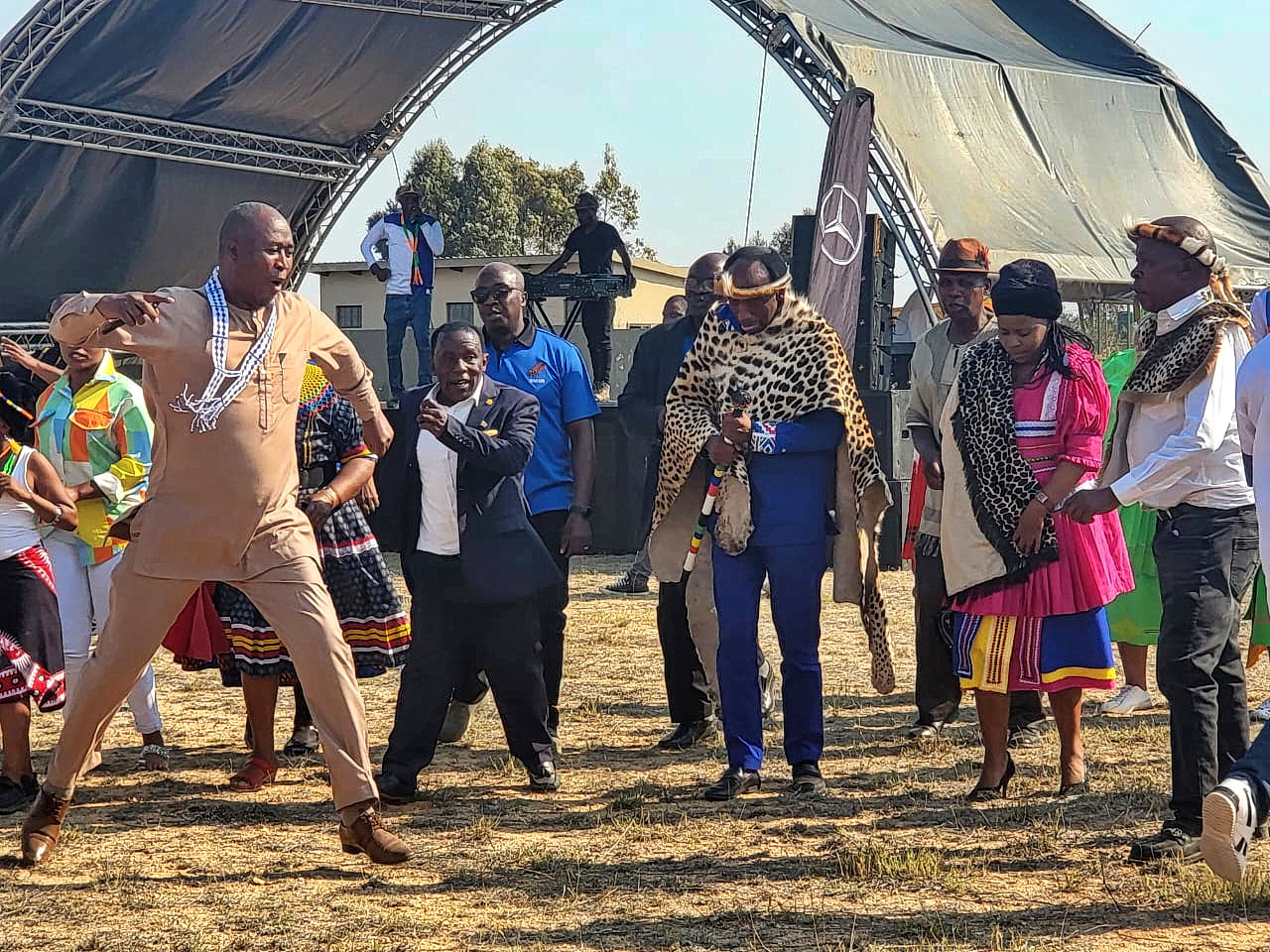
The Mashashane traditional authority recently hosted a celebration of the clan’s heritage at an event graced by among others deputy minister of the Department of Co-operative Governance Human Settlement and Traditional Affairs Zolile Burns-Ncamashe and ANC Limpopo executive member Soviet Lekganyane.

In South Africa there are two main groups of Ndebele people, the Southern Ndebele and the Northern Ndebele people.
While these two groups share some relations, each of these ethnic groups possess their unique culture and history. One particular group, Ledwaba/Maune Ndebele which identify as the Northern Ndebele reside in various parts of Limpopo, with strong communities in Ga-Mashashane, Zebediela, Mokopane, and parts of north western Mpumalanga.
The Department of African Languages at the University of Pretoria demonstrates that these two Ndebele speech forms are not mere variants of the same language. They are, in fact, two independent languages. Any attempt to harmonise them is bound to fail and could result in the creation of an artificial speech form that the Ndebele people would likely reject.
“Failing in Sepedi is equated with failing our mother tongue, leading to heart-breaking consequences for our families. Generations of fathers, mothers, uncles, aunts, brothers, and sisters have seen their dreams shattered due to this unjust treatment,” says Ledwaba.
“The community of Ga-Mashashane, along with their traditional authority, is tirelessly working towards this goal through annual celebrations like Muxade, which honour Chief Lesiba Maraba II Ledwaba.
“Chief Lesiba Maraba II Ledwaba is described as one of the powerful chiefs who ever ruled MaNdebele. One way to recover their proper role as one of the nation’s oldest ethnic communities, long disadvantaged by apartheid, is by recognising and teaching it in schools and beyond,” Ledwaba says.
The traditional authority of Ga-Mashashane has reached out to various government institutions since 1997 when efforts to have the language formally recognised gained traction.
These include Chapter 9 entities like the office of the Public Protector and the Cultural, Religious, and Linguistics (CRL) Commission, seeking assistance in resolving their language recognition issues.
However, maintaining consistent communication and follow-up with these institutions has posed challenges. As a result, the Ndebele people of the north continue to bleed, longing for recognition, just like other ethnic groups in the country.
Despite promises and initial steps by the Department of Education, Northern Ndebele has yet to receive official recognition or support in schools.
“Efforts have been made to introduce Northern Ndebele language education in schools, but publishers declined to print the necessary learning materials due to a lack of funding from the Department of Education,” says Ledwaba.
The community hopes that having their independent language officially registered will serves as a vital bridge between the past and the future, nurturing a sense of identity and fostering social cohesion.
“It will mean that our home language will get represented in governmental structures and integrated into teaching and learning in schools,” Ledwaba says.
Ledwaba added that the are making a mark and hope that through the annual celebrations of Ledwaba/Maune Ndebele, the community will strives to revive their culture, paying homage to Chief Lesiba Maraba II Ledwaba and keeping the flame of their heritage alive. – news@mukurukuru.co.za

Be First to Comment