Many families of former gold miners who contracted silicosis pinned their hopes on a cash settlement resulting from a successful class action. But as the Trust set up to compensate those affected pays out claims the dependents are now confronted with the sad reality of just how little the money will impact their lives writes Lucas Ledwaba
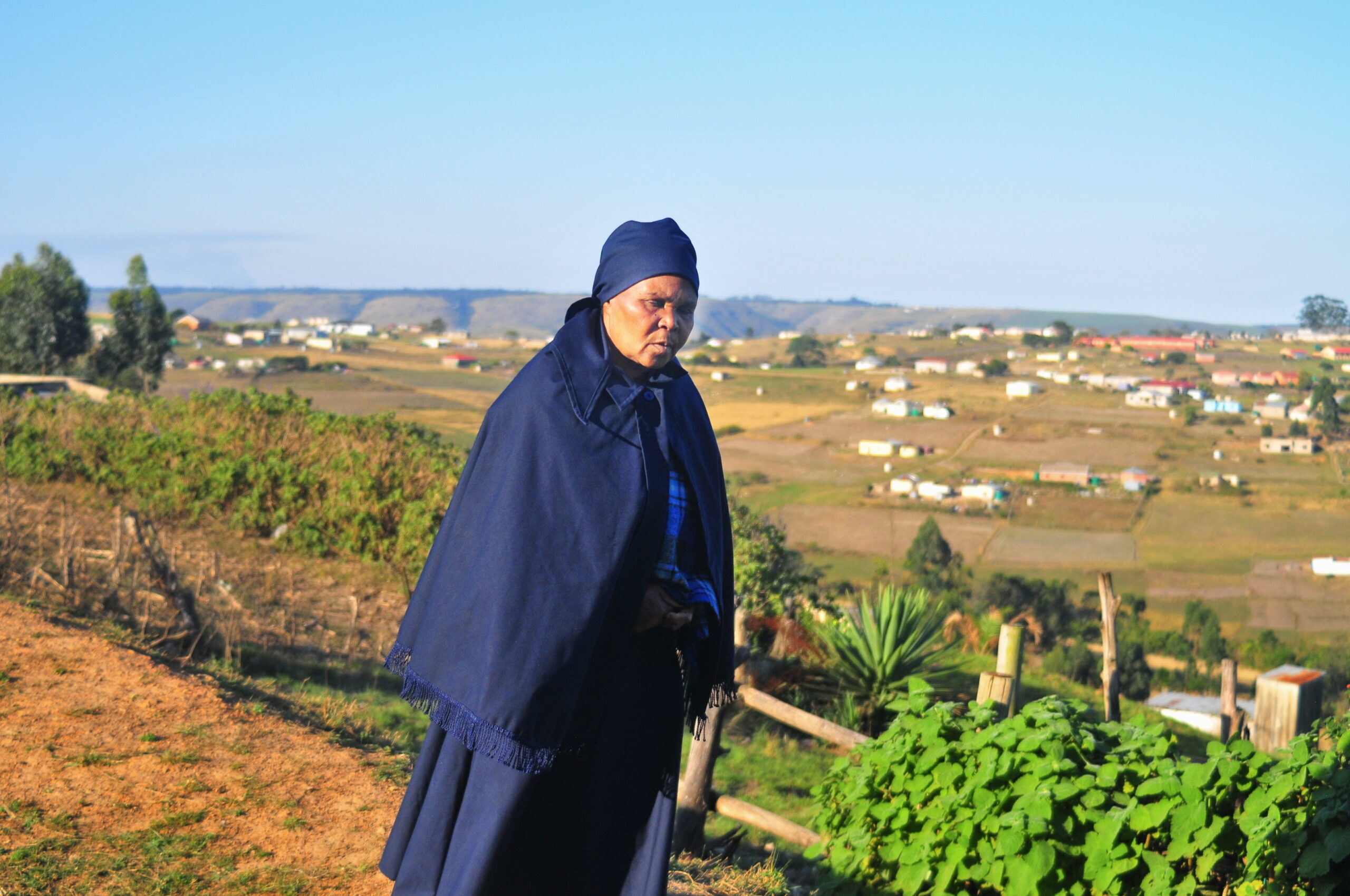
Every morning when MaCetshwayo Diya, 57, opens the door to their home – she is met by the grim sight of her late husband’s grave.
Her husband Mzawubalekwa Diya who contracted silicosis during his time on South Africa’s gold mines, died in her arms and those of their daughter Nolinda one winter morning in their home in Etyeni, a rural village in the Eastern Cape.
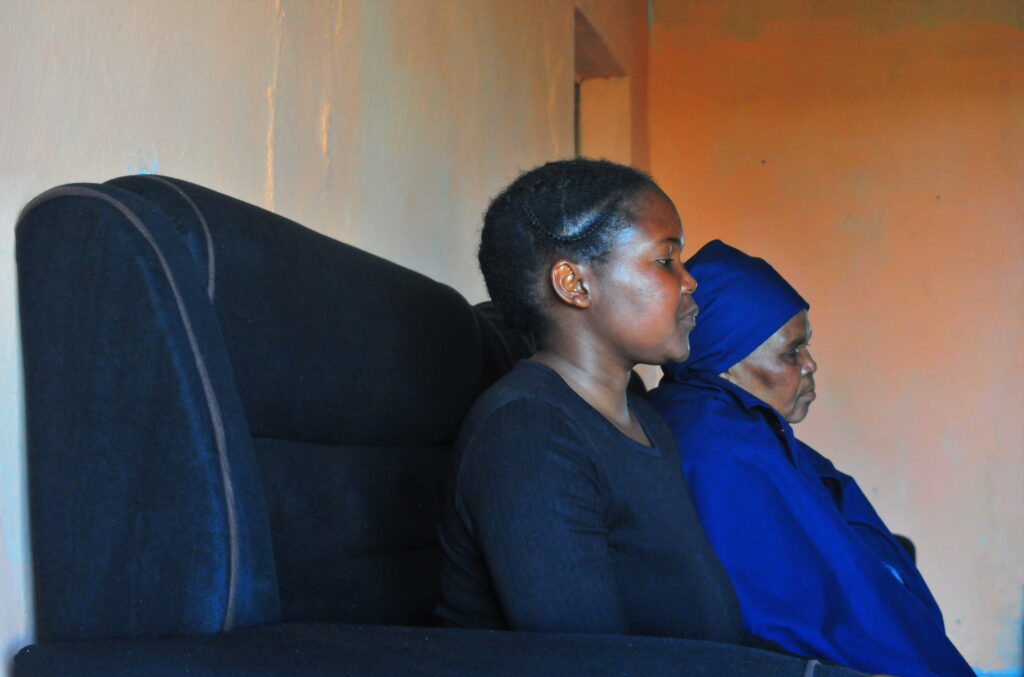
And now she can’t stopy crying. Nolinda isn’t coping either. She looks away in the distance and shakes her head when asked how she is holding up after the horrific experience of watching her father die.
“I’m not coping at all,” she says.
Her grieving mother is deeply concerned about her.
“She is not well. What she experienced has caused her a lot of pain,” MaCetshwayo says in a barely audible, broken voice.
Her husband was one of former goldminers who were litigants in the silicosis class action brought against companies that operated 33 gold mining companies in 2012.
The action was brought against the companies who operated in South Africa for negligence that led to hundreds of thousands of mineworkers contracting tubercolosis and silicosis.
Lawyers for Diya and his colleagues argued the employers failed to provide adequate health and safety measures that led to workers inhaling silica dust which leads to lung diseases.
The lawsuit which was settled out of court in 2018 covered workers employed on the gold mines between 12 March 1965 and the date of the commencement of the legal action.
Last year Diya received a cash payout from the Tshiamiso Trust which was set up to process and compensate qualifying former workers. While the lawsuit and expected financial compensation have raised the hopes of many families, the grim reality however is that the cash payout they have pinned their hopes on is unlikely to sustain them for long.
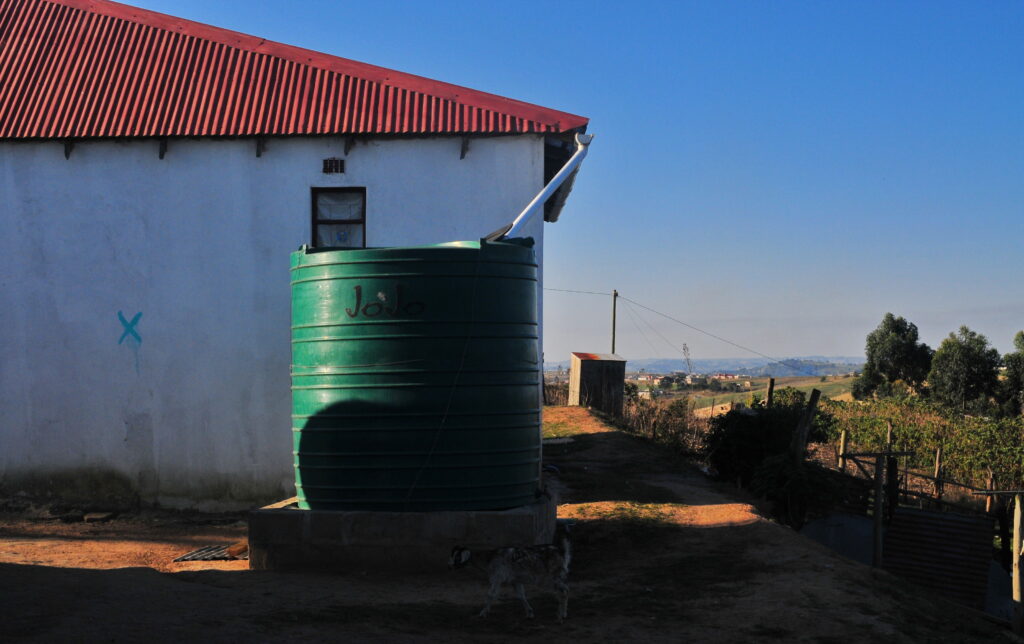
“The money made some difference because before, we had no house. But we at least managed to build a house with some of it. What was left after that paid for his funeral. So right now our situation is very bad. We have nothing and I’m scared about what will happen to us in future,” says MaCetshwayo.
The prospect of a future without an income frightens and adds to her troubles. For now they are still surviving on the left over groceries donated by neighbours and church members for Diya’s funeral.
He died on 18 May in the house he had built from the class action settlement payout.
She is unemployed. Nolinda is also unemployed. Her brother has followed the well worn track by young men from the villages of the Eastern Cape, to seek work in Durban where he’s struggling to survive on piece jobs.
MaCetshwayo is sickly and depends on chronic medication collected from the local clinic. Both her and Nolinda daughter never received trauma counselling after the horrific experience of watching Diya pass away.
MaCetshwayo spends her days knitting grass mats which she tries to sell in the nearby town of Bizana on social grant payment days when the streets come alive with hawkers. But when night falls she retreats to the emptiness of her room and weeps for her late husband and children who face a bleak future.
He left us nothing
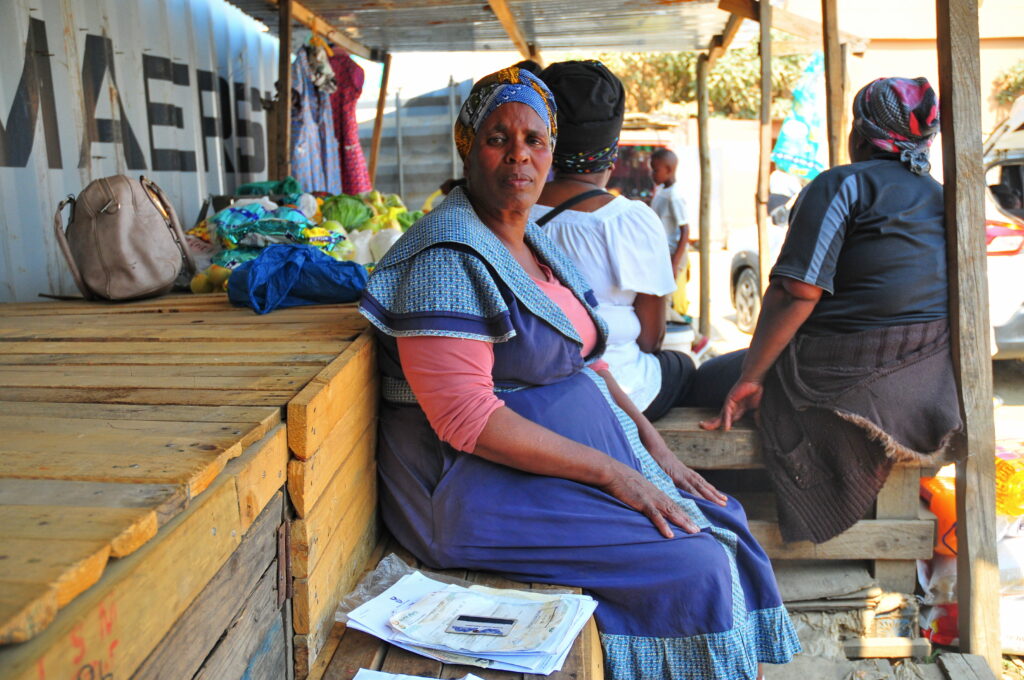
About 100km away in Lusikisiki, Nokukhanya Mguca sells fruit and vegetables in the bustling town’s taxi rank. Some days she goes home without having sold a single item.
Competition for clients is high in this town where many who are not employed in the retail stores or government departments, survive on the state’s welfare and in the informal sector.
There seems to be as many roadside hawkers as there are potential clients in this bustling little town, where traders sell anything from second hand clothes, sugar cane, roasted mielies, gumboots, traditional costumes and dagga.
MaCetshwayo and Nokukhanya’s battle for survival is a struggle faced daily by thousands of widows and orphans of former goldmine workers in the Eastern Cape, Lesotho and other areas in southern Africa which served as labour forwarding areas for the mines.
After many years working down the gold mines, earning a pittance with very little in terms of benefits, husbands and sons returned home with nothing, sickly wrecks waiting to die.
Such conditions have resulted in a generational curse of poverty where children like Nolinda, struggle to finish high school or get qualifications that would stand them a good chance of earning a better living on the job market.
In 2016 the Diya family sold their three remaining cattle and sheep to pay for Nolinda’s enrolment for an electrical engineering course. But when the funds were depleted she was forced to drop out.
Her father tried to find temporary jobs but couldn’t hold down one due to his deteriorating health.
Like Bizana, the Lusikisiki area was one of the labour fowarding areas for the gold mines up country on the Witwatersrand and the Free State goldfields for the better part of a century.
Nokukhanya’s husband Eric Mguca also joined the trek up north to work on the mines when he was barely out of his teens. In 2005 he was sent back home, coughing and thin as a stick. He spent two weeks in hospital but was discharged as there was “nothing more that could be done.”
A short while later he too died in the arms of his wife. Through the years they were married they hardly spent time together – the migrant labour system demanded wives and children couldn’t join their husbands and fathers who were packed into single sex compounds on the mines most of the year.
Mguca’s medical records indicate he had tubercolosis. But his death certificate states he died from natural causes.
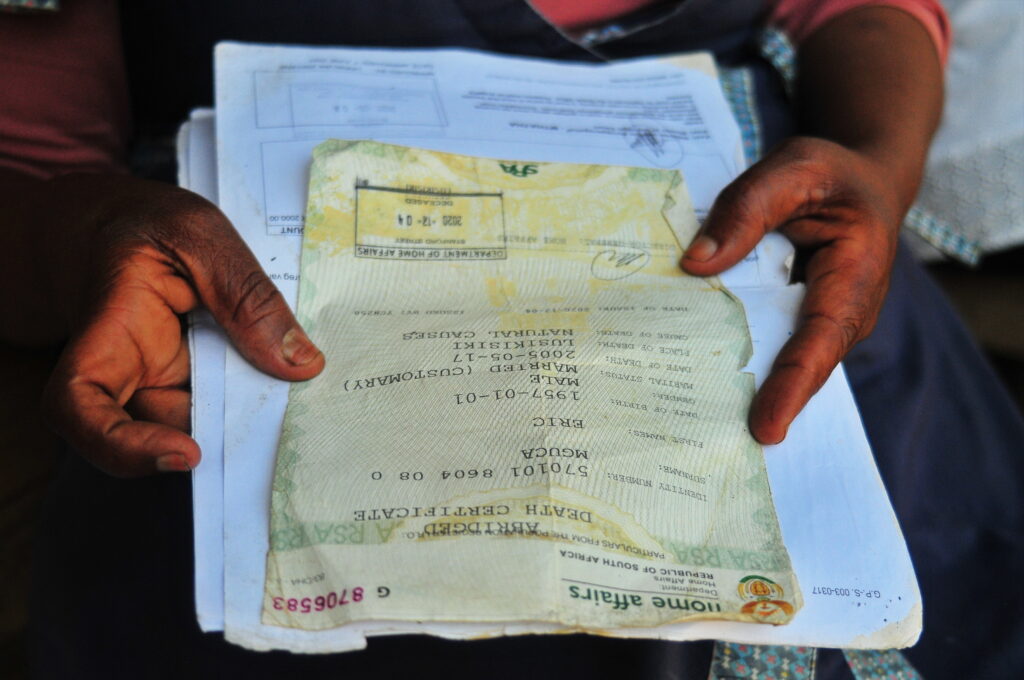
“He left us nothing. When he came back home he was very sick. Even now we have no proper house. We have just a little three room,” says Nokukhanya amidst the bustle of the taxi rank.
She says her husband received only R12 000 from his provident fund and long service after working since the 1970s. The couple married in 1984.
Her three unemployed children also scramble for a living doing whatever they can around Lusikisiki.
She put in a claim with the Tshiamiso Trust in 2021 but has been frustrated by a lack of feedback and progress.
“I don’t know where we stand with this [Tshiamiso Trust claim]. If we get a payment from my husband’s claim then I can be able to take my children to school. That way they can find jobs,” she says.
There was so much dust down there
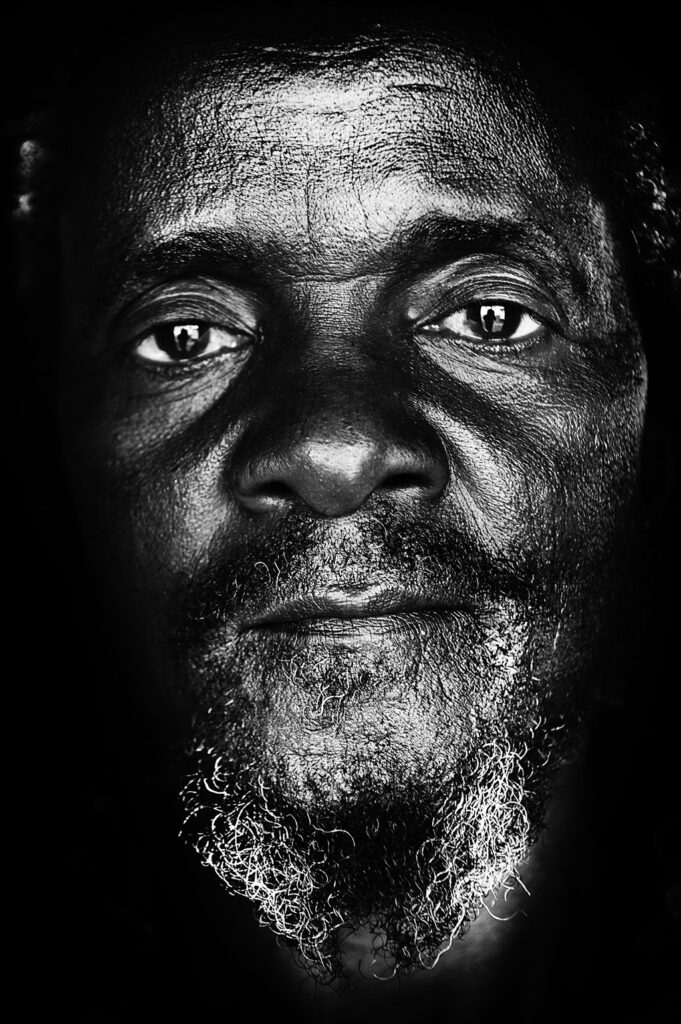
Diya’s fate was no different. In 2012 he was diagnosed with silicosis, an incurable lung cancer caused by long term exposure to silica dust generated during gold mining.
Like many men from his part of the world, Mpondoland, he was recruited to join the mines at the age of 18 in 1978 through The Employment Bureau of Africa [TEBA].
In the book Broke&Broken – The Shameful Legacy of Gold Mining in South Africa [BlackBird/Jacana 2016], Diya spoke about his experiences undergound: “There was so much dust down there that sometimes we couldn’t see each other.”
While he was away digging for gold in far away lands, MaCetshwayo stayed home to raise their children.
“It was hard because we hardly had anything and he was gone to the mines most of the time. I had to do piece jobs like cooking for learners in schools around the village. I raised my children through struggle. Life was very hard,” she says.
After 27 years of toil he was discharged from work in 2005 with a measly payout of R70 000. He had begun feeling sick and weak a year earlier, coughing up blood and spending time in hospital. However, he was not told the reason why he was being laid off work.
MaCetshwayo was shocked when in 2005 her husband returned home and told her he had been retrenched.
“Life was very hard. He came back from the mines with nothing. When he was still working he would send us some money. It wasn’t much. But it was better than nothing. But when he came home (after retrenchment) life got much more difficult,” MaCetshwayo says.
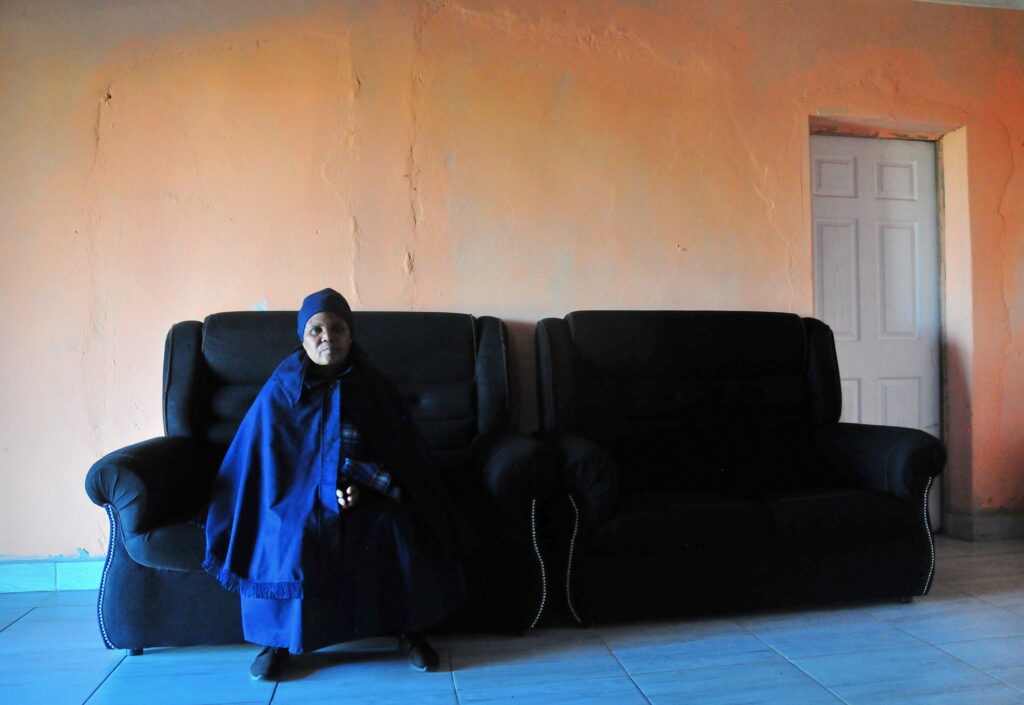
She is still dressed in the navy blue doek, blouse and skirt that signify her status as a recently widowed woman. After a year’s period of mourning the family is supposed to sacrifice a cow as part of a ceremony to mark the end of the mourning period. She is not certain where resources for this sacred ceremony will come from.
Her deep sobbing fills the cold silence of the house that has now become eerie and sorrowful.
“When the case (silicosis class action) was concluded he was very excited. He had been praying all along and never lost hope,” MaCetshwayo says.
Diya was a deeply religious man, a devoted member of the Nazareth Baptist Church and also steeped in the Mpondo traditional values.
In line with these beliefs he had planned to use some of the payout to conduct a thanksgiving ceremony to the gods for having answered his prayers for compensation.
But a month before the planned ceremony, he died. He used part of the money to build a house for his family and another portion to pay off debts and settle some of the things he couldn’t do in the past.
Diya was buried in his homestead in line with Mpondo traditions.
“It breaks my heart,” MaCetshwayo says about her husband’s final resting place which stands at the edge of steep hill overlooking a spectacular valley.
She breaks down and sobs.
“I know that I would never go to bed hungry if the person lying here was still alive.”
Silicosis trust reports progress, but miners’ lobby group raises concern
The Tshiamiso Trust has reported payouts of R808-million to 9,118 claimants during the financial year ending in February 2023. The trust was established in 2020 as part of the silicosis class action settlement agreement.
The trust, which held its annual general meeting (AGM) in August, confirmed an increase of more than 400% in payments to claimants, taking the cumulative total to R1-billion two years after claim lodgments began.
However, the Justice for Miners (JFM) campaign has raised concern about the “slow pace of processing payouts”.
“We are pleased to know that they are starting to pay out claimants. However, the process is very slow…
“They need to finalise their processes so that they can pay more claimants, including the widows, and start doing [benefit medical examinations] for the qualifying claimants,” said Ziyanda Manjati of the JFM in response to the outcomes of the AGM.
The CEO of the trust, Dr Munyadziwa Kwinda, said that by the end of the reporting period it had completed a total of 46,736 benefit medical examinations. Kwinda said that, through the Employment Bureau of Africa, the trust had managed to search archived service records for 4,366 individual mineworkers who are potential claimants not yet on the database.
The JFM further raised concern that “the financial advice for claimants which is in the trust deed is not adequately applied or rolled out” and “there is no trauma or other support offered”.
“They do not even inform claimants properly when the compensation is paid. There is no acknowledgement that the compensation is being paid for an illness that the claimant got on the mine nor any expression of concern or human care for what the claimants are going through while living with these illnesses.”
Kwinda explained that the abridged death certificates issued to families in most instances do not refer to the primary cause of death, rather indicating the manner of death, which is natural, unnatural or undetermined.
As a result, families are required to provide further documentation from the departments of Home Affairs and Health, which may provide more information on the cause of death. – news@mukurukuru.co.za
This story first appeared in our weekly Daily Maverick 168 newspaper.

Be First to Comment