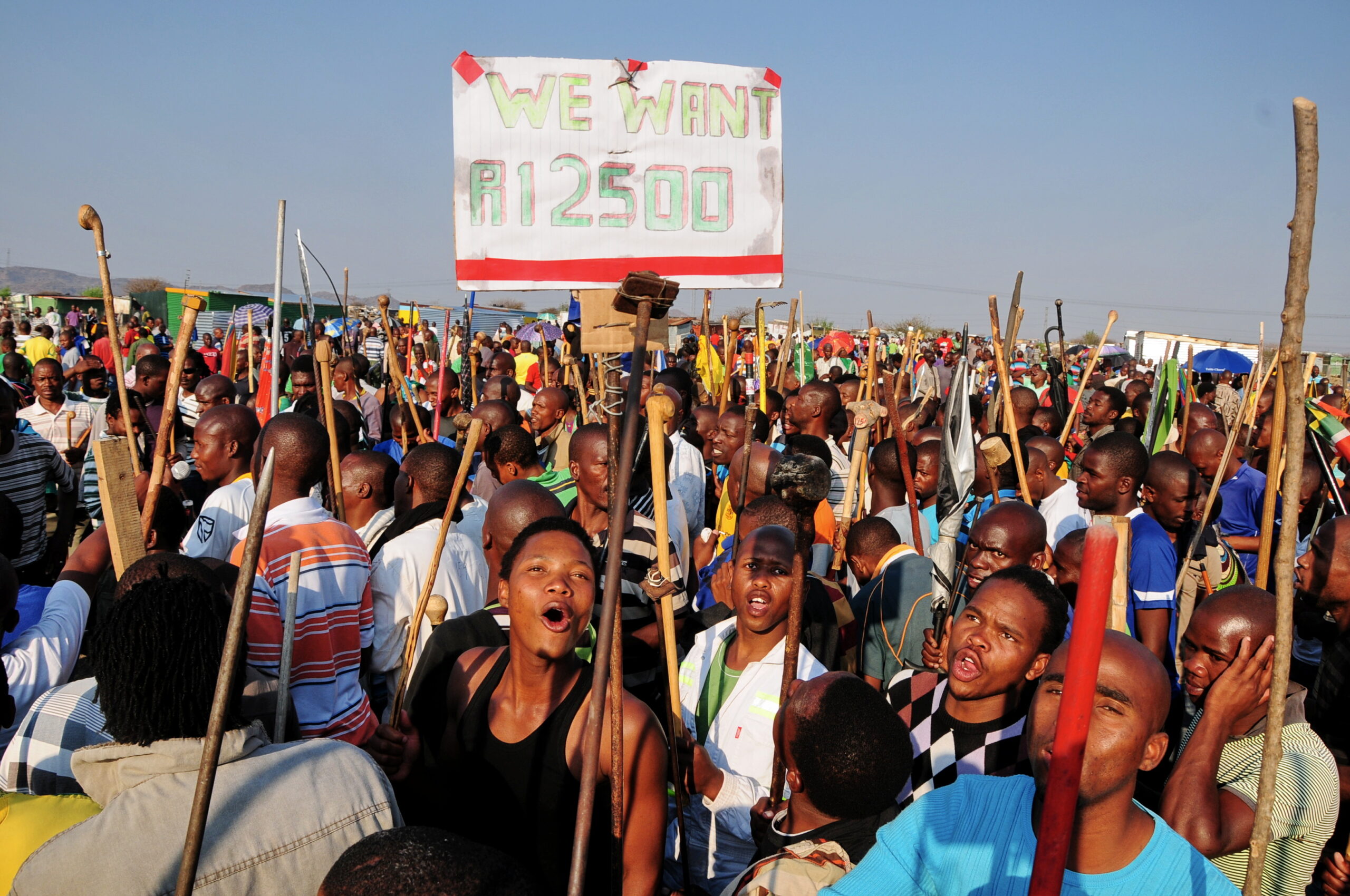
A decade and year has passed since the bloody massacre of the mineworkers at Lonmin took place at the koppie in Marikana. In this first installment from an edited extract from his paper presented to the UNISA Department of Jurisprudence on: Constitutional Democracy, Rule of law and the Workers movement: Ten years since Marikana – Mametlwe Sebei argues that the massacre was a qualitative historic turning point in the political relations between classes in the country.
In the working-class consciousness, the Marikana koppie, a haunting site and monument of this massacre, is a poignant reminder to the capacity for lethal savagery and brutality of the democratically elected, ANC led, black majority government.
This year, like the past nine [10] years, workers have gathered at the koppie. Like years before,the long list of speakers have raised the question: How could the armed forces of the constitutional state and rule of law direct their guns against working class people daring to rise on their feet. to protests oppression, degrading and unbearable conditions in which they continue to languish decades after the end of apartheid?
AMCU President Cde Mathunjwa answering the question said: “the current constitution doesn’t work for the majority and should be scrapped.”
This is correct, but only a first step. Whilst it is fashionable to question and even attack the current constitution, its jurisprudence is commonly accepted.
Ultimately, it is the whole state, its real constitution in the capitalist property regime, and social relations, that constitute the material basis for violence, oppression and exploitation of the working classes.
Along with these, the legal ideological foundations of the state, that is, constitutionalism and rule of law, must also be overturned, to clear the path towards genuine emancipation from wage slavery, its exploitative relations and the violent state apparatus underwriting them.
Marikana and its real meaning for the constitutional democracy, and rule of law.
The massacre was a moment of extreme shock to all in the country, and across the world but for the few who closely followed and correctly appraised the logic of the intensifying class struggle in the platinum belt in years leading to it.
Many were shocked mainly because these were not guns of the Apartheid regime. It was the former national liberation movement that led the struggle to overthrow and purge the state of the legacy of violence and brutality, that defined its political relationship with the black working class.
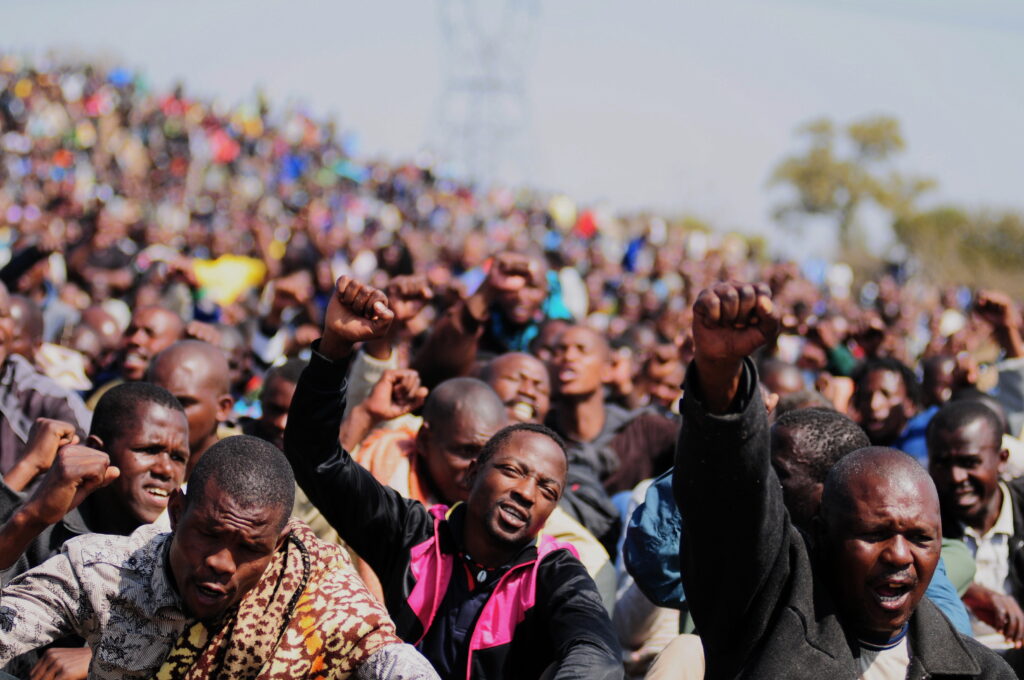
The ANC government turning its guns on the mineworkers, who were the backbone and vanguard of the black working class that elevated it to power, would have been enough of the shock.
The fact that it was urged in this bloody revelry, by the now President Cyril Ramaphosa, a founding General Secretary of the National Union of Mineworkers, who owe all of his personal fortunes to the mineworkers.
And he did so at the behest of an arch British imperialist mining corporation, Lonmin.
Most importantly, the Marikana massacre was a qualitative historic turning point in the political relations between classes in the country. This brazen attempt to drown the mineworkers revolt against the horrendous conditions of black working class slavery in the mines stripped naked, and brutally exposed the essence of the democratic state, its widely celebrated constitution and rule of law.
It clarified in the most bloodiest fashion possible the fact that the constitutional state under [a] black majority government, although, fundamentally different in political form from its Apartheid predecessor, in its class and political essence, it serves the same purpose, for the same interests, as the Aparthied state did.
The massacre graphically revealed that a black majority-constitutional democratic state, like its racist white military-police state predecessor, is an organised system of oppression at the core of which, is an armed apparatus for violent repression, that guard and defend the profits, and private property of the capitalist class.
It laid bare the essence of the rule of law, as no more than a juridical system that legalise the plunder and exploitation of the working class; and the courts, as its political attorneys.
The role of courts in the events and years following the massacre, was exposed to be political counsels of the ruling class. Like every counsel, they may check, sometimes even admit and correct this or that secondary aspects of the principal’s case.
But this is always done in the professional service of the principal, all the more to strengthen and advance the principal’s cause most effectively. The role of jurisprudence and courts is essentially to rationalise and enforce the constitutional state founded on property relations that creates and perpetuate the economic dictatorship of the tiny elite of imperialist and neo-colonial capitalist class, and its organised violence to keep the working class down in subservience to it.
Lastly, the massacre exposed the trusted democratic government and its ‘public servants and representatives of the people’, to be the shopstewards and execute committee of the capitalist class.
- Mametlwe Sebei is a political commentator and a lecturer in the Department of Jurisprudence at the University of South Africa

Be First to Comment