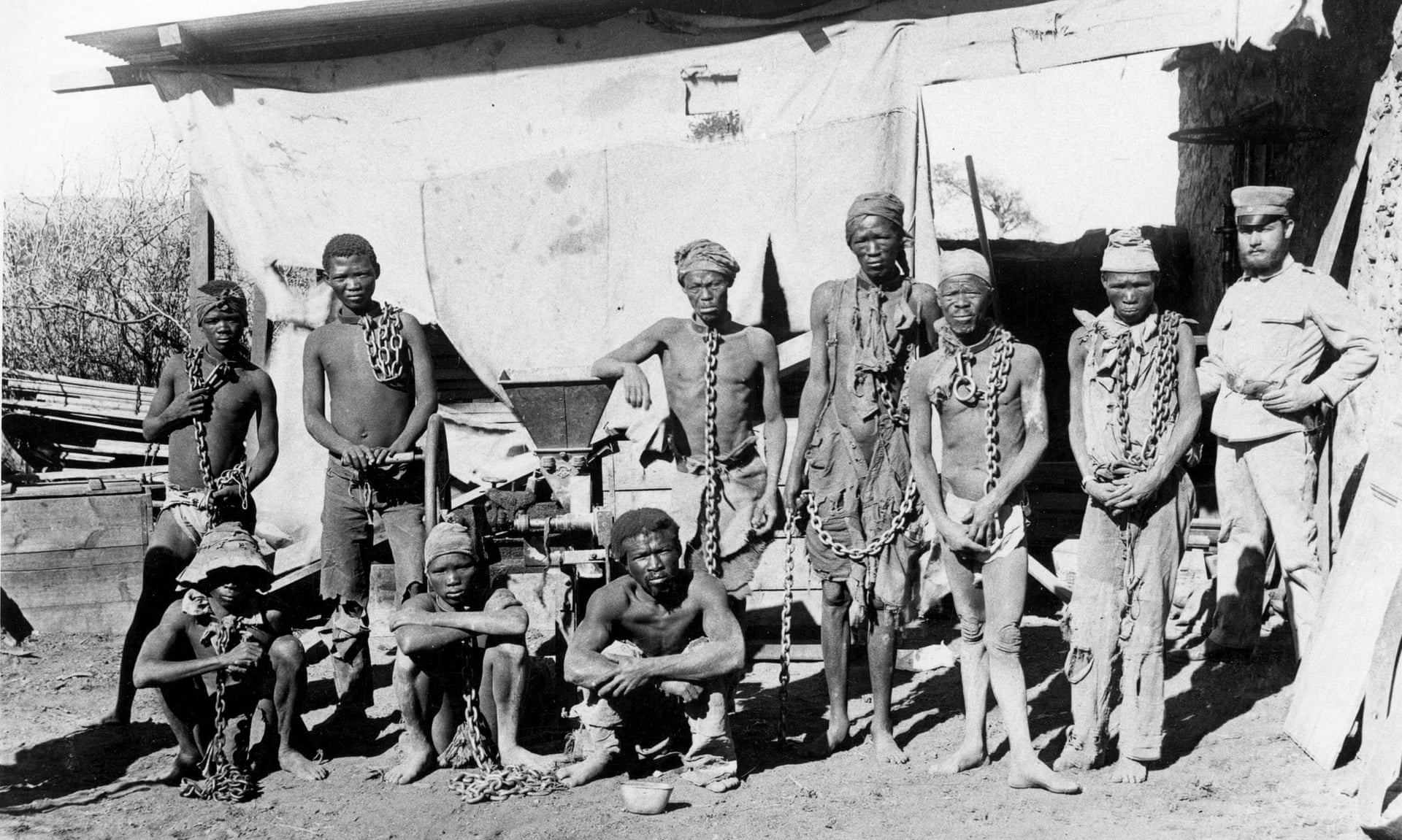
AHEAD of the film Measures of Men’s world premiere at the Berlinale Special Section 2023 director Lars Kraume added his voice to the ongoing calls questioning Germany’s failure to accept responsibility for the Namibian Genocide.
“If you think that this is more than 30 years now, and that we still haven’t signed an agreement on reparations, that still our president has not traveled to Namibia and apologized, and still there are again artifacts and human remains in German museums, I have to say, 30 years is a long time. When is it going to happen?” Kraume remarked.
In a cinematic portrayal of a tragic chapter in history, the film Measures of Men brings to light the massacre coined by historians as the first genocide of the 20th century.

The Herero and Nama tribes of Namibia, who dared to resist German colonial rule and defend their land, were subjected to a devastating genocide campaign that claimed over 100 000 lives.
Based on true events that unfolded from 1904 to 1908, the film delves into the harrowing accounts of the atrocities committed against these indigenous communities by German soldiers.
Written and directed by Kraume, the plot follows Alexander Hoffmann, a German ethnologist played by Leonard Scheicher, who travels to Namibia, then a colony called German Southwest Africa to gather art and skulls for the Berlin Ethnological Museum.
Hoffmann is impressed by the intellect of their translator, Kezia Kambazembi, and after spending time studying the tribespeople loses his moral compass. He starts to question the racial theories of white supremacy.
In January 1904, the Herero and Nama tribes rose against German colonial rule, resulting in the deaths of over 100 German settlers while sparing certain groups including women and children.
General Lothar von Trotha’s victory in the Battle of Waterberg in August forced the OvaHerero into the harsh Omaheke desert, leading to many dying from dehydration.
The Nama people rebelled in October, enduring a similar fate. The genocide claimed the lives of an estimated 24,000 to 100,000 Herero and 10,000 Nama people.
German forces prevented the Herero from leaving the Namib desert, causing widespread starvation and thirst.
Later, concentration camps subjected thousands to disease, abuse, and exhaustion, leading to the majority perishing. Having delved into the depths of Imperial German Army in the late 1800s and early 1900s tumultuous history, as a filmmaker Kraume has earned acclaim for his works including The People vs. Fritz Bauer and The Silent Revolution.
Through a blend of historical accuracy and compelling storytelling, the one hour 56 minute film shines a spotlight on the resilience and courage of the affected communities, while highlighting the importance of acknowledging and confronting the injustices of the past.
Namibian actress Girley Jazama, portraying Kezia Kambazembi in the film, expressed her connection to the story, emphasizing that it was not just the Herero and Nama tribes, but also the San and Damara people who were impacted by the genocide, making her involvement in the film personally significant.

In a post-release interview with Das Kinomagazin in March 2023, when asked why she believed there was limited awareness about the genocide in Germany, she responded: “I am going to speak frankly…I think it is because your country obviously wants to dismiss the fact that this actually happened.”
Both the German and Namibian governments have been criticized for their 2015-2021 interstate negotiations that excluded the voices of the affected Herero and Nama communities, which the United Nations Special Rapporteurs have highlighted as a key legal concern.
The tribes’ direct participation through self-elected representatives is guaranteed by international law and enshrined in Article 11 and 18 of the United Nations Declaration of Indigenous People.
This issue persisted despite the negotiations leading to the Joint Declaration initialed in May 2021.
Notwithstanding Germany’s commitment of €1.1 billion over 30 years to support impacted communities, the UN Special Rapporteurs have urged the government to acknowledge legal responsibility for colonial crimes and provide reparations.
The Rapporteurs affirm that according to international standards reparation should aim at comprehensively addressing the multiple consequences and effects of the harm suffered, “including as a result of killings, starvation, torture, gendered violence, forced labor or loss of property, and should entail measures in the areas of restitution, compensation, rehabilitation and satisfaction.”
During a press briefing in Windhoek on 27 April 2023, the Ovaherero Traditional Authority (OTA) and the Nama Traditional Leaders’ Association (NTLA) said it was historic that they were able to erect a Remembrance Tombstone in honour of all victims of the Shark Island concentration camp.
“For 33 years in post-independence Namibia, attempts have been made, not only [to] erase the horrific crime of genocide which took place on current day Namibian soil. Rather, very calculated attempts have also been made to erase the story of Shark Island, by creating a Tourism Campsite, which never reflected the history of this Island,” read the statement.
“For the 1st time in the history of an independent Namibia, the children of the victims of the genocide committed during the German colonial era, gathered specifically at Shark Island as Ovaherero and Nama people, and as Namibians and citizens of the world.”

Be First to Comment