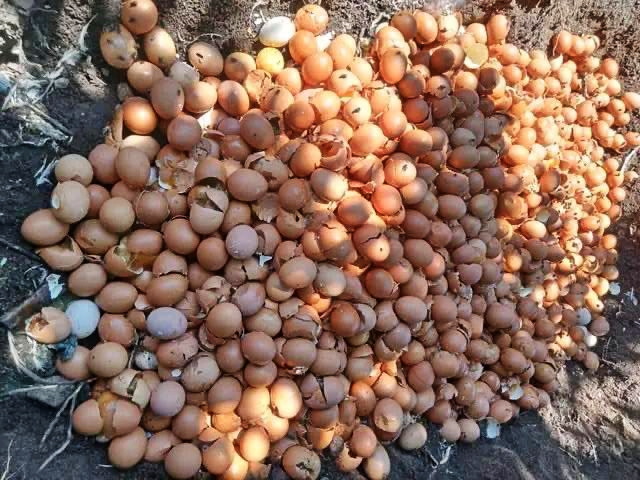
THE SA poultry industry bears the brunt of the escalating electricity crisis, with some farmers and abattoirs losing vast quantities of chickens and money everyday.
It is not different to what poultry farmer Thabang Mondlane faced due to loadshedding which slowly crippled his enterprise and left two of his casual workers without jobs.
“This is a significant obstacle that is hindering our operations and negatively impacting our business sustainability,” Mondlane told Mukurukuru Media.
Mondlane (31), who hails from Pienaar ka Daantjie near the Mpumalanga capital Mbombela, was funded by the City Of Mbombela as well as the National Youth Development Agency (NYDA) to kick-start his enterprise.
In 2018, Mondlane founded the Mini eKhanyayo poultry enterprise which was inspired by the need to provide his community with high-quality poultry products. The enterprise is a supplier of quality day old chicks, layer chickens, broiler chickens as well as eggs.
Unfortunately for Mondlane, he was confronted with the challenge of load shedding facing many businesses which disrupted the incubation processes, feeding and watering systems for the chickens, in addition, affecting the temperature control of the shelters in his poultry farm.
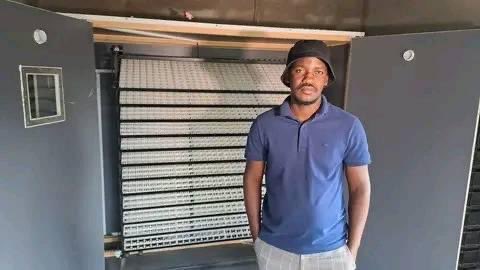
A graph published by the Bureau for Economic Research (BER) shows that up to March 2023, the energy shed from the grid -expressed as total gigawatt hours- has become worse than it has ever been before.
The Bureau for Economic Research (BER) data indicates that the level of load shedding in the first two months of 2023 (and a few days into March) is already at levels seen between January and October 2022.
“We have suffered considerable financial losses, due to reduced productivity, decreased hatch rates, and increased mortality rates. The instability caused by load shedding is jeopardising the viability and long-term sustainability of our business.
We are seeking funding assistance to acquire a reliable alternative power source that will enable our operations during power outages,” he said.
Scores of poultry farmers depend greatly on electricity to continue operating.
Minister of Agriculture, Rural Development and Land Reform Thoko Didiza recently revealed that “various government interventions to ease the load-shedding burden on farmers, such as the launch of the Agro-Energy Fund with Land Bank, load curtailment by Eskom expansion of the diesel rebate to the food value chain will have a positive impact.”
Didiza said in the first quarter of 2023, about 888 000 people were employed in primary agriculture, up 3% quarter to quarter and 5% year on year. This is well above the long-term agricultural employment of 780 000.
A survey on the Impact of Load-shedding on small businesses in the Township Economy 2023 conducted by Nedbank in partnerships with Township Entrepreneurs Alliance (TEA) found that 64% of businesses stop running during load shedding and can only resume with operations when the power returns.
Additionally, the survey found that 66% of businesses shed jobs. Many township small businesses experience financial loss in that 66% had to retrench employees to remain operational, and just over 5% closed down entirely.
The poultry incubator used for the hatching of eggs must be on all the time to allow for the production to be a success which forced Mondlane to use diesel as a substitute for electricity during load shedding.
Ultimately, the business could not afford to keep utilizing an alternative power source in order to keep operating.
The South African Poultry Association (SAPA) CEO Izaak Breitenbach said that load shedding could result in birds dying.
“If load shedding occurs, ventilation stops in the absence of generators or an alternative electricity system being immediately activated, and birds can die in as little as 45 minutes,” Breitenbach said.
One of Mondlane’s casual workers Eddie Sindane was devastated by his loss of income due to the ongoing period of widespread power outages. His hope is that things can go back to the way they were before load shedding became a national crisis.
The growth of Mini ekhanyayo which was as a result of Mondlane’s diligence saw Sindane becoming part of the enterprise as more hands were needed to carry out the daily tasks at the poultry farm.
“The nightmare started when they implemented stage 4 to 6 load shedding. Mondlane spent more money on fuel resulting in a big loss of money ranging from R50 000 – R75 000 and he tried by all means to stock but load shedding kept on pushing us back so he decided to shut down the business and that is when we started to starve.
“Now we wake up everyday and sit the whole day without doing anything, just hoping that the loadshedding issue can be resolved quickly because we are starving,” said Sindane. – news@mukurukuru.co.za

Be First to Comment