Integrated Regional Observation Carbon-Climate Constraints workshop aims to revolutionise carbon emission observations as 2030 deadline looms writes Mokgadi Mogy Mashako
In a pioneering effort to tackle the pressing issue of greenhouse gas emissions, South African scientists in the fields of ocean, terrestrial, and atmospheric carbon converged for an integrated workshop amid a looming 2030 deadline to reduce carbon emissions in line with the Paris Agreement.
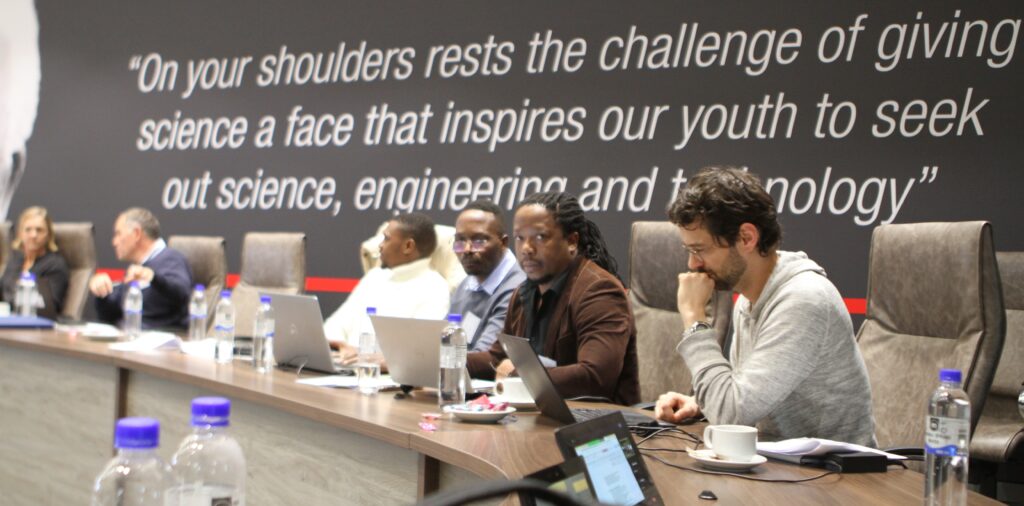
The Expanded Freshwater and Terrestrial Environmental Observation Network (EFTEON) and Stellenbosch University’s School for Climate Studies (SCS) convened the gathering, which took place at the National Research Foundation (NRF) offices in Pretoria this week.
Dr Gregor Feig, manager of EFTEON and a climate and environmental change scientist, said it was the first time in history to have the best minds under one roof discussing matters of advanced carbon emission observation across land, sea, and air.
Participating scientists, hailing from institutions such as the NRF, universities, the Department of Forestry Fisheries and Environment, and the SA Weather Service, joined forces to identify the crucial needs, priorities, and action plans required to enhance the observation of exchanges between the land, ocean, and atmosphere.
Feig said amid the country’s worsening energy crisis there are suitable options available to address the situation without harming the environment.
“In terms of being able to get energy onto the market, gas is more probably a suitable alternative but with what one is seeing on a global context, the cost of renewables is coming down very quickly, and it looks like that is going to be the best alternative in the South African context.
I think a lot of it should be able to be put onto the grid quite quickly, and as far as I can see that can be the quickest and most effective and most environmentally friendly beneficial solution,” Feig said.
According to the latest Intergovernmental Panel on Climate Change (IPCC) Sixth Assessment Longer Report (AR6) 2023: “from 2010 to 2019, there have been sustained decreases in the unit costs of solar energy (by 85%), wind energy (by 55%), and lithium-ion batteries (by 85%), and large increases in their deployment.”
Renewable energy would require changes to SA’s energy system and to its national grid, a move that poses an enormous task to the department of mineral resources.
Tabling his R10.7 billion budget vote on Tuesday, Minister Gwede Mantashe announced that the Integrated Resource Plan (IRP) 2019- a crucial policy framework for electricity generation, is currently being reviewed and a draft will be presented to Cabinet in the second quarter of the financial year.
“Notably, the single-most challenge we face to address the energy crisis is the grid unavailability. For instance, three thousand two hundred megawatts (3200MW) wind capacity of the four thousand two hundred megawatts (4200MW) procured under BW [Bid Window] 6 could not be allocated due to grid unavailability,” Mantashe said.
The Sixth Assessment Report noted that depending on the specific circumstances, reforestation, improved forest management, soil carbon sequestration, peat land restoration, and coastal blue carbon management are methods of carbon dioxide removal (CDR) that can improve biodiversity, ecosystem functions, local employment, and livelihoods.
“Furthermore, risks can arise from some responses that are intended to reduce the risks of climate change, e.g., adverse side effects of some emission reduction and carbon dioxide removal (CDR) measures.”
Upon releasing the 8th National Greenhouse Inventory Report this year, the department of forestry fisheries the environment (DFFE) stated: “over the next two decades, South Africa will have to increase its carbon sinks in order to reach the long term-goal of a Net-Zero carbon economy and society by 2050.”
Scientists are open to the idea of increasing carbon sinks; however, agree that Agriculture Forestry, and Other Land Use AFOLU systems are the most promising of these approaches as long as there is cautious intervention.
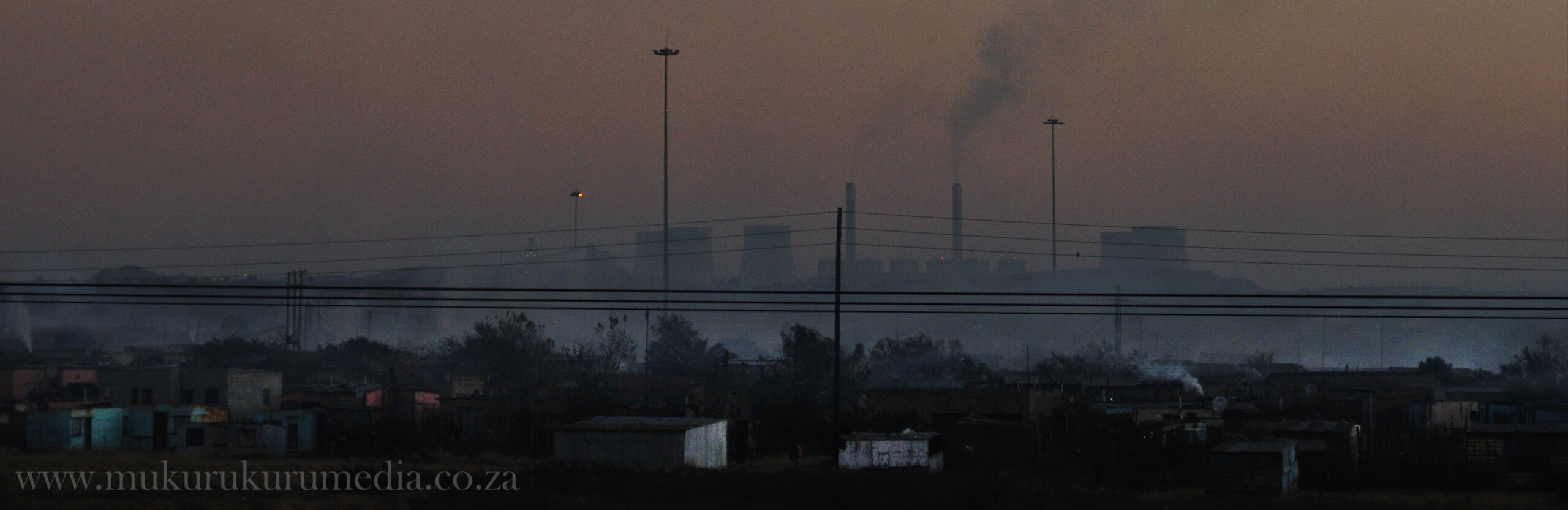
Total emissions from the energy sector for 2020 were estimated to be 379 505 Gg CO2e, which is 81.0% of the total emissions for South Africa.
Energy industries are indicated to be the main contributor, accounting for 62.4% of emissions followed by transport (12.7%) and manufacturing industries and construction (8.8%).
Professor Pedro Monteiro from Stellenbosch University’s School for Climate Studies praised the efforts of the Department of Science and Innovation (DSI) in investing in scientific and engineering infrastructure capabilities through initiatives like the South African Research Infrastructure Roadmap (SARIR) Program and other initiatives.
“What we want is in three to five years’ time to have this, I’d like to call it, a gold standard of carbon observation.
“In some parts of the regional ocean-land-atmosphere system, we can now go from some ocean or terrestrial measurements at a few locations to reconstructing 20 – 30 year maps of regional carbon variability using machine learning techniques,” added Monteiro.

Be First to Comment