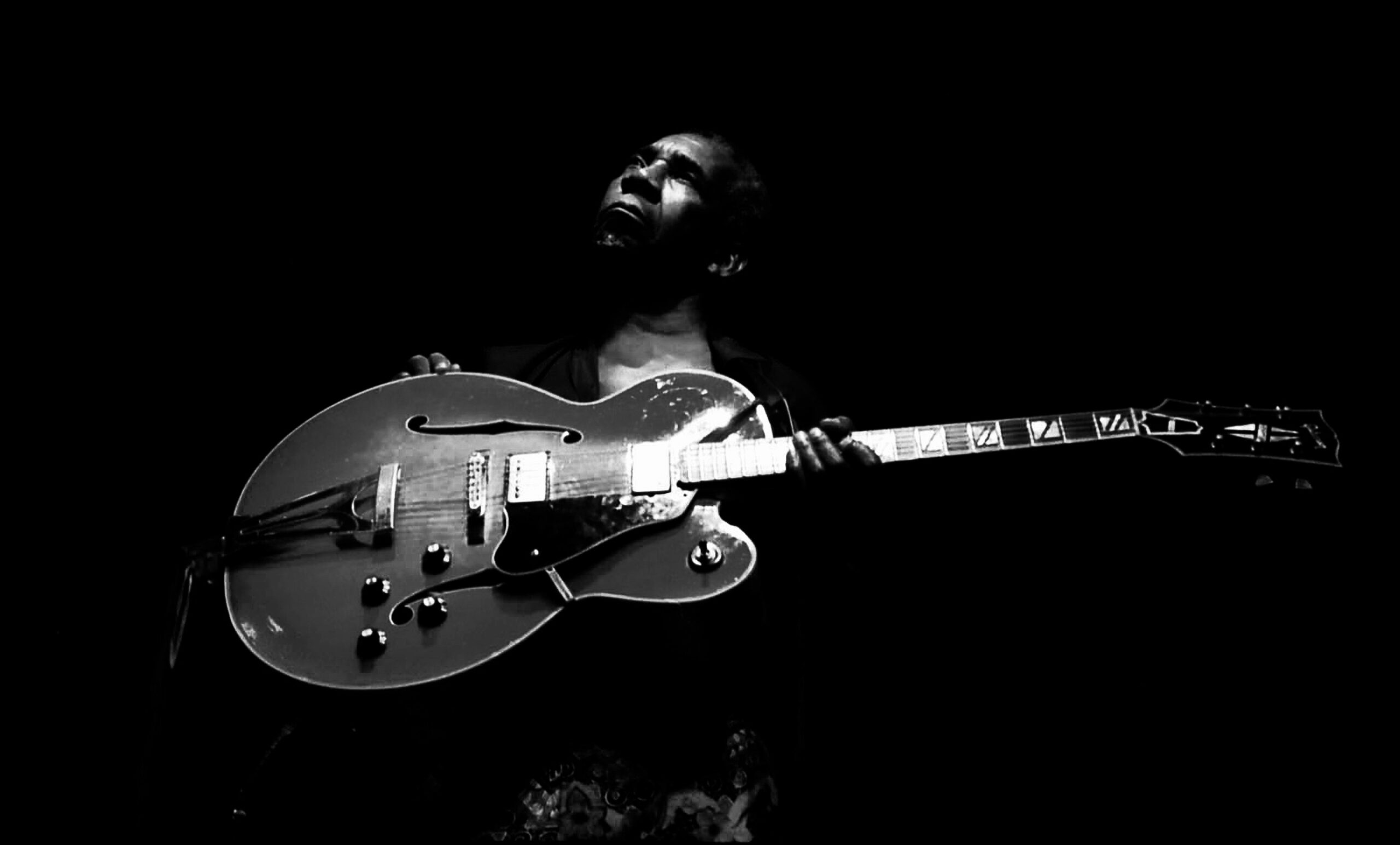
Malombo music pioneer and master guitarist and composer Philip Tabane would have turned 83 years old today. LUCAS LEDWABA pays tribute to the fallen genius who was born on 24 March 1940 (he always gave his date of birth as 1934).
THE Playhouse, Durban, August 2006—QUICKLY and quietly, standing at the door to the main dressing room backstage, I cast my eyes left down the long passage, then right and left again. It was deserted.
Only a few jovial voices could be heard cracking up in the distance. Then, with both my hands on the aluminium door handle, I sneaked my head back inside and whispered the all clear.
Then I closed the door behind me and walked over to the dressing table where Philip Tabane stood nervously clutching a black nylon bag.
“I don’t want Arabi to find me doing this. You know how he is,” Tabane said, producing a half jack of vodka from the bag.
Then from the same bag, he took out a small glass and poured a stiff tot which he downed in one swift swig. Quickly, he gulped it down and poured another stiff tot.
“Here,” he said, nervously shoving the drink into my eager hand. I buried the vodka deep where even the rats wouldn’t find it, leaving a sting down my parched throat.
Then Tabane gave me the bottle to put away safely in the bag as he walked back to sit on a wooden chair where he had been seating earlier.
He picked up his Gibson Super 400 electric acoustic guitar from its stand and began to strum frantically and earnestly, humming and hissing like a healer summoning the spirits. It was a spectacularly haunting sight, watching Tabane’s reflection on the myriad of mirrors lining the walls.
The frantic strumming of guitar and the hissing sounds of a man possessed by his own music echoed through the large changing room. It was a sort of stormy calm before the really stormy storm, for out in the main theatre, a packed audience waited with anxious anticipation for the night’s main act, Dr Philip Tabane and Malombo.
It felt somewhat unbelievable, to be standing there, in the privacy of this legend whose music had taken him to the US in the 70s, where he played with the great jazz wizard Miles Davis.
“I cannot really say these things,” Tabane told me one day while we sat at his Mamelodi home, talking about his experiences with Miles and life in the USA, over shots of Smirnoff vodka and nicely cut pieces of green apples. I never asked the relevance of having vodka and apples at the same time. But I loved it.
“You see, broer waka, Miles said to me, ‘you are great!’ But I can’t really say those things. Batho ba tla re ke a blofa. [People will say I’m boasting].
Tabane and his nephew, percussionist Gabriel Mabe Thobejane, set the jazz scene in the US alight in the early 70s, playing at such reputable joints as The Village Gate in Greenwich Village, New York, a venue graced by greats like Miles, John Coltrane, Duke Ellington, Dizzy Gillespie, Dave Brubeck, Nina Simone and Herbie Mann among others.
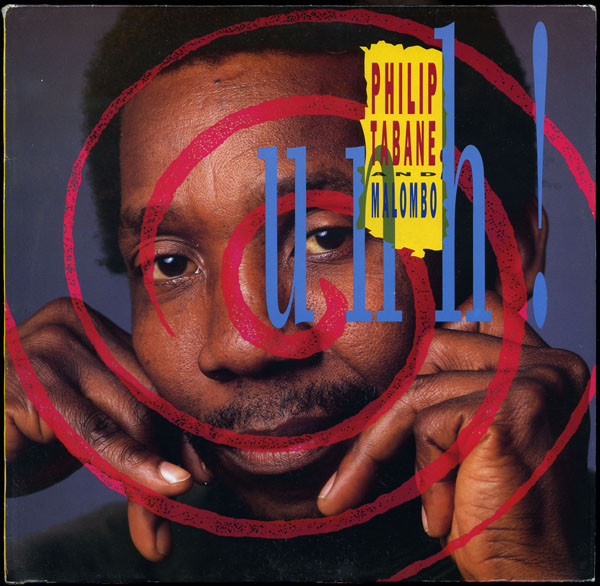
“Hey, Village Gate!” Tabane recalled his nerves ahead of his performance there. “I was told that there, people would throw glasses and things at you if you played nonsense. I was very, very nervous.”
But of course, once the music possessed him, he recalled, he forgot he was even playing at the feared Village Gate.
In the late 70s, Tabane turned his back on the lights and glitz of the USA, deciding to head home to Mamelodi, which like the rest of the country at that time, in the midst of growing militant resistance to apartheid.
Artists, mesmerised by his talent and predicting it would bring him millions, were stunned by his sudden decision.
“I remember one woman,” Tabane said. “She was a South African exile, she told me to go home. She said to me, ‘don’t be like these people, they are lost.’”
Miles was among those who begged Tabane to reconsider, but his mind was made up. He wanted to go home, where for a decade or so afterwards, he was relegated to the sidelines, struggling to get gigs in an industry run by record companies looking for a fast buck in commercial disco and bubble-gum music. But he soldiered on,
preaching the gospel of Malombo through his guitar and drums, caring very little about his dire financial situation and the big money he could have had he stayed on in the US.
Now, here I was in October 2006, watching this great man whose music, once brought a one legged man on crutches to tears.
It happened in New Orleans in the US in the late 90s, where during a spirited performance at the Congo Square, the man let go of his crutches and breaking into dance like he was possessed.
A white woman, during the same show, moved by the wailing sound of Tabane’s guitar and the thumping of his son Thabang’s drums, broke into uncontrollable tears.
Tabane’s manager, Mocheke, asked the woman what the problem was.
“This ain’t music! This ain’t music!” cried the woman. “This is healin’! This is healin’!”
Now, that night in Durban, before I intruded on the master’s solitude as he prepared for another spirited show in the dressing room, I had stood in on a sound check session. It must have been two hours before the show, and the auditorium was empty, with only the sound engineer, Mocheke, driver Basopo Manzini and myself milling about.
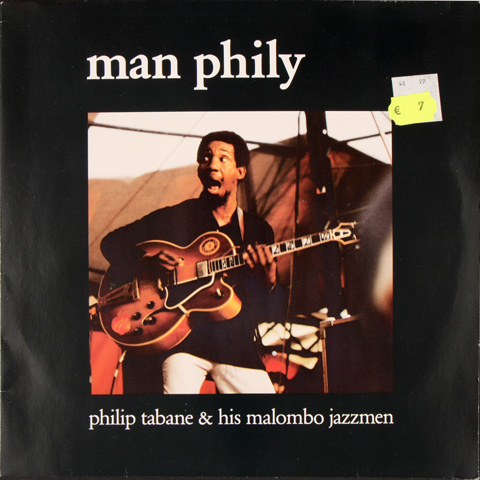
I was on stage taking pictures as Tabane, Thabang and percussionist Mphunye Raymond Motau prepared to do a sound check. I was looking through the viewfinder of my Canon A-1 when suddenly, I heard the familiar opening chords of the song Ke Kgale from Tabane’s guitar. As you can imagine, a Malombo disciple like me had heard this song countless times before and knew each and every note and lyric.
But that evening, as Philip Tabane and Malombo played Ke Kgale, I came close to tears, Tabane’s voice and guitar riffs rose through the theatre like a spirit medium, a powerful healing force in search of broken hearts and souls to mend, to heal, to comfort, to hurt even more with its raw power that seemed to be drawn from somewhere way above the planets beyond mother earth.
I felt the hair on my arms uncurl like a seedling sprouting at sunrise, my fingers frozen in awe of the melody that was now possessing me. Looking at the pictures even today, nine years later, I can still hear the song, which rang in my head for weeks after that, ringing in my ears, possessing my soul.
Later that night, Tabane opened his act with a brilliant solo with the number Man Phil. By the time he was joined on stage by Thabang and Motau for the rest of the set, the audience was almost on its feet, begging for more.
On stage he looked nothing like the man who only a while ago appeared surprisingly nervous and forced to seek help in the intoxicating spirits of Eastern Europe.
I found it quite strange that this legend who had for the past 50 years graced the stages of great music festivals and jazz clubs here at home and abroad would still be nervous ahead of a performance after so many years in the game.
But perhaps the nervousness was not necessarily born out of a fear of performing on stage, but rather from fear of disappointing the audience. Tabane, as Mocheke once explained to me on a trip to visit the legend at his home in Mamelodi, is a perfectionist who loves and respects his craft.
“It’s in his nature. Philip is a perfectionist and he is proud of his craft. You should see him polish his guitar. He respects his music. To him the stage is a sacred place,” Mocheke said.
Mocheke, may his soul rest in peace, was an eccentric, passionate and unpredictable man who never hesitated to give anyone, including Tabane, a man two decades his senior, a thorough tongue lashing if he felt he needed one, did not approve of any drinking before gigs and had made this clear to Tabane on numerous occasions.
But Tabane can be quite stubborn, a weaknesses which is also his strength. He argued that a few tots before a gig helped him relax a bit. But of course, Mocheke didn’t think so. And this often led to heated confrontations.
Adding to this already precarious issue was the fact that at times, Tabane would take to the stage and instead of sticking to the agreed playlist which had been rehearsed, he would instead listen to his heart, his sould, and play whatever the spirits decided, much to Mocheke’s annoyance.
Once, after a show at the Krugersdorp Game Reserve in Mogale City in February 2007, Mocheke, who referred to Tabane as Warra (my brother) had it out with Tabane after what he labeled a poor showing.
I had noticed Arabi’s irritation during Tabane’s performance, which was held in a picnic area on the grounds of the reserve, but didn’t really understand what had rubbed him up the wrong way.
“How was the performance?” I asked Mocheke afterwards.
“Warra,” said Mocheke, his face contorted into an irritable frown as we walked backstage where Tabane stood chatting to a group of admirers who had seemingly been blown away by the performance. “Ledwaba! That was poor and I’m going to have it out with this old man. We rehearsed certain songs and he goes and plays something else!”
I asked him to elaborate.
“Warra, this is a picnic environment. I said to Philip he must play songs which require a lot of drumming and no singing because people in this kind of environment just don’t want to listen to someone singing or watch someone doing tricks on the guitar. But then he goes and does exactly the opposite!”
The same scenario played itself out in Chuenespoort in Limpopo province in June 2008. Arabi was livid and even went as far as telling me he would dump Tabane, if he continued in that fashion.
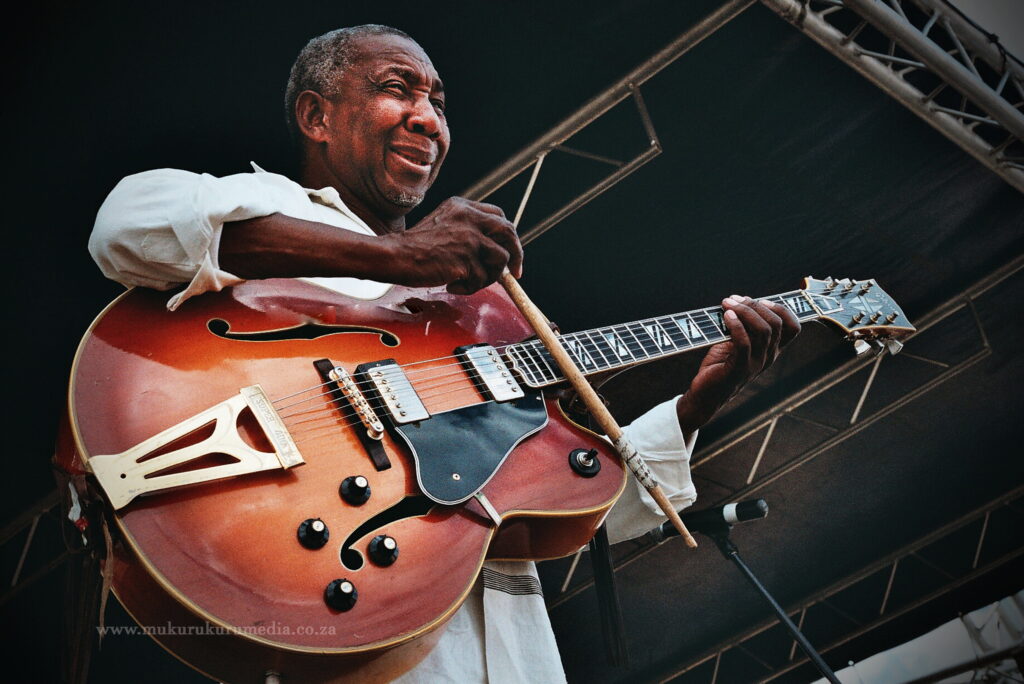
He was irritated yes, but I doubted very much he meant what he said about dumping Tabane because the two just loved each very much. After Tabane’s performance that afternoon, Mocheke came up to me.
“What did you think of that?” he asked.
“Well, it was wonderful,” I answered back.
“Warra,” Arabi said shaking his head with disappointment. “That was poor. That was really poor.”
Then we walked up to the VIP tent where we met Thabang.
“Thabang, was your father drinking?” Arabi asked.
“Yes, they were drinking with uncle Zakes (Zakhele Ntuli the bass guitarist) in the kombi,”
Thabang responded nervously.
That night, in the kombi on our way back to Mamelodi, I asked Tabane about his confrontation with Mocheke.
I was expecting him to go on the defensive but Tabane calmly, almost dismissively, explained his decision not to follow the script.
“Ledwaba broer wa ka,” Tabane said as we drank vodka. “I cannot play what I don’t feel on the day. I played what I felt like playing and sometimes people like Arabi will never understand that. Here, let’s drink broer wa ka!”
We laughed about it, before he continued.
“I have fought with all my managers about this. This thing broer wa ka is in the heart. I cannot play something I don’t feel. Even in America people like Herbie Mann used to ask me why I often played songs I did not rehearse, and I would ask them if they rehearsed before they spoke.” news@mukurukuru.co.za
*this article was first published in 2015

This tribute piece is the thing ???? Just like a Phillip Tabane’s repertoire.
Thank you Ntate Styles, Badimo ke bao.