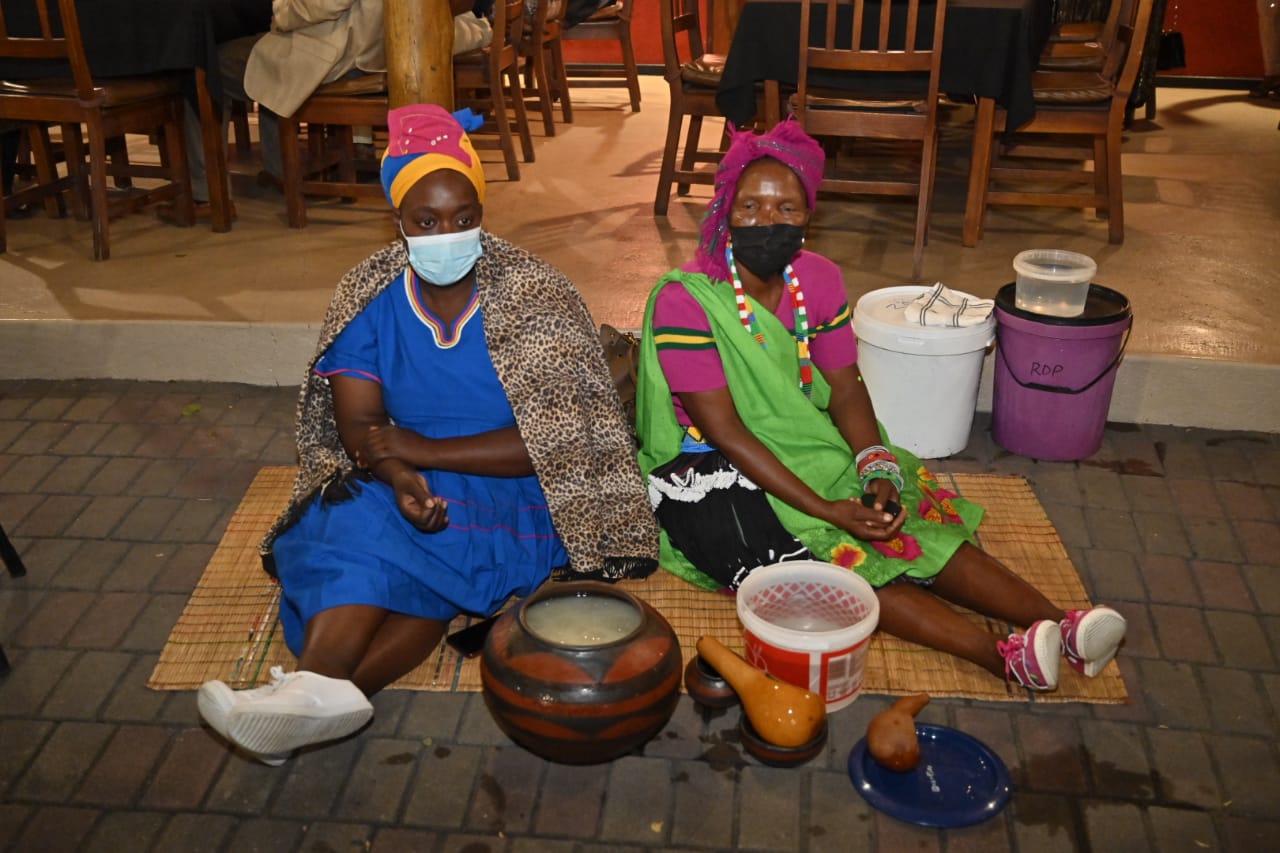
UPON realizing that waiting on the government to allocate pieces of land to rural black farmers was equivalent to finding a needle in a haystack, Anna Molala says she invested in herself to become the organic farmer she is.
Molala, who formed part of the SMMEs exhibiting at the recent Marula Festival week in Phalaborwa in Limpopo said that she and a few farmers across the Capricorn district have had to group themselves to remain sustainable.
The Marula Festival, which annually injects about R50 million into the district hosted more than 2000 people in Phalaborwa from the 6 to 9 April.
“Each of the women I work with uses their backyards for farming purposes, and we even host workshops on each othe’s farms to share insights on how to grow organic produce,” Molala said.
Molala’s company Motsule Organic Projects falls under the Matladi group, consisting of females from Madisha, Lebowakgomo, Polokwane, Mamabolo, Makweng and other surrounding villages.
Molala said for the best pest control for her crops, she uses a mixture of indigenous and homegrown plants, which act as organic pesticides.
“We don’t have the money to buy gallons of the many pesticides on the market, and by us using what we grow, our plants are less exposed to the negative effects caused by store-bought chemicals,” Molala said.
Molala, who registered a stall during the festival in her own capacity, said that the week started very slowly but picked up towards the end.
She believes that even though many onlookers would ask a question or two, instead of making a purchase, it made for great business exposure nonetheless.
“I decided to open my own business and work with the land I already had at my disposal, I started small but I now package and brand my products,” Molala said.
She harvests and processes a variety of dried lemongrass, rosemary, moringa seed, chaya seed and spinach, wild dagga, and sugar beans.
“I work with my children so that they can see how it is done and continue after I am long gone, they also help with deliveries in my village,” she said.
“I left them at home because I thought to make the best of the little investment I spent here to exhibit, honestly from the sales I made I am going to buy supplies I need for my packaging,” Molala said.
The same sentiments were, however not shared by Ronnie Tshehlakgolo of Dimo le Dimo Leatherworks.
Tshehlakgolo who has been a shoemaker since matric said he attended a course to get his craft to a professional level and has been in business for seven years now.
“I saw the high unemployment rate, especially in the province, and decided to create my own employment,” Tshehlakgolo said.
He said he made a plan to meet the R500 exhibition fee, however, was disappointed by the turnout of investors and buyers.
“People have stopped to tell me how much they love my leather products, both the shoes and bags, however, no one made any purchases”
“If I could give the organizers some advice, I would say that in future when planning exhibitions that are meant to benefit us, they should look at generic dates towards the end of the month,” Tshehlakgolo said.
He believes that purchases would benefit small businesses when people generally have money.
The shoemaker said he makes six pairs of shoes a day and would be able to increase the number of orders if there was support in the form of equipment.
“Machinery is expensive and so at the moment I have one of my own but I collaborate with a partner who has a sewing machine,” he said.
“This means other than paying my one employee, I divide the profit with my sewing partner, which in the long run dents my pocket as I give him R100 per pair,” Tshehlakgolo said.
Tshehlakgolo who moved operations back to his house after rent proved to be unsustainable, said that through equipment support he would be able to realize his dreams of assisting community members with work opportunities in his workshop.
“Not everyone is gifted academically, and I believe it is my role to offer skills training to those who would be interested in learning from me and grow to make an income as artisans,” Tshehlakgomo concluded. – news@mukurukurumedia.co.za

Be First to Comment