
Last updated on 3 August 2022
He made history by becoming the first non-racial boxing champion and built a blazing legacy. Zakhele Diamante Shiba catches up with the 79-year-old former champ
Retired former boxing champion Elijah “Tap Tap” Makhathini is happily living a quiet life in the rural Habeni Village, near Eshowe, in northern KwaZulu-Natal.
His maroon coloured house is in the rolling mountains of Umlalazi Local Municipality where the grey-haired boxer is enjoying his twilight years away from the bright lights of the city.
We found him sitting with his grand-daughter – one of more than a dozen from more the more than 20 children born by his four wives.
At his age, his only worry these days is the thieves that have occasionally helped themselves to his livestock.
Approaching his 80th birthday in September, the ravages of time mean Tap Tap can no longer administer the kind of beating he used to give his opponents on the cattle thieves. He admits that he’s no longer as quick as he was in his late 20s when he started to box.
His voice is hoarse, and one of the reasons he doesn’t spend time at his shop or bottle store – about a kilometre from his home – is that his eye-sight is failing him.
His children and grandchildren are the ones who are taking care of his business. He built the businesses from the little he made from his boxing years.
He never got a chance to attend school so while herding cattle in the hills of home, he learnt to box.
As we talk about his former glory days, Tap Tap shows the dangerous left hook that floored opponents – some never beating the 10 count. His left fist is actually bigger than the right fist. He trained his left hand more than the right hand. His left hook left opponents dazed and confused when they hit the canvass.
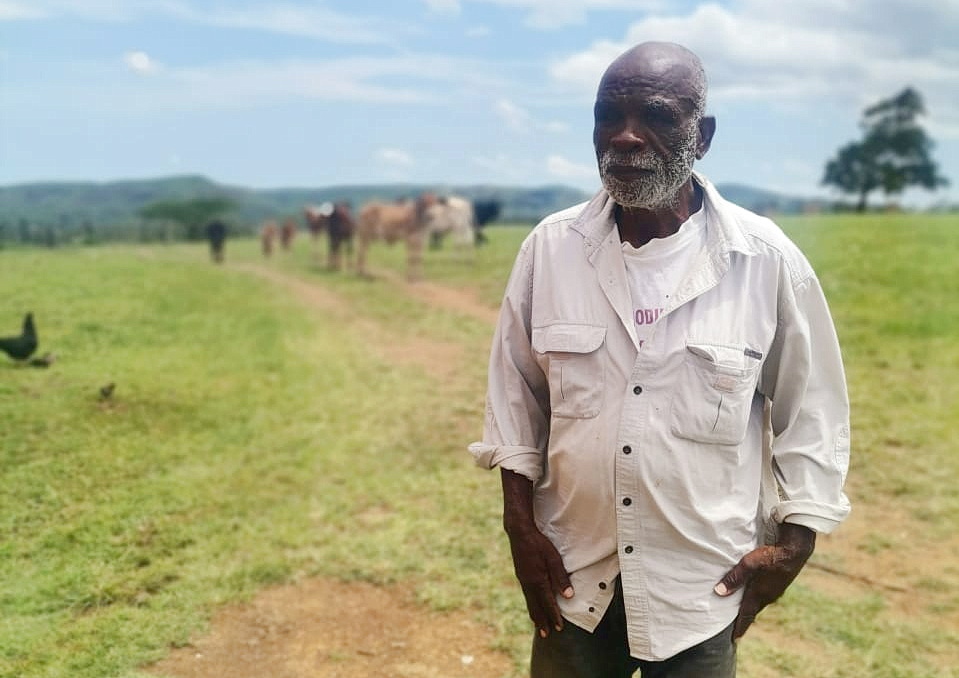
“I trained with a sack full of river sand. So I focused on making the left hand stronger because my opponents thought I would hit them with the right hand,” says Tap Tap in his trademark hoarse voice.
“Just like in boxing when I took care of my body that paid me to support my family, I do the same by taking care of my livestock. See how healthy these cows look,” he says.
Growing in the rural Habeni and having lived in small towns like KwaDukuza (formerly Stanger) and in Durban, Tap Tap is happy to take things easy with his family in the rural village.
“Nobody treats me like a celebrity here. Even when I go to town, the community treats me like their hero for flying the flag of our small town.
“When I am outside KwaZulu-Natal, I proudly tell people I come from the rolling hills of Habeni. Since most don’t know the name, I have to explain that our town is Eshowe.”
SOME people struggled to pronounce his surname Xulu correctly, so Elijah opted to be called by his clan name Makhathini.
In his dompas in the 1960s until his retirement from the ring, one of the most feared boxers to come out of the former Natal colony was registered by his birth names, Mjaheni Elijah Xulu.
A proud polygamist with four wives, Tap Tap is a father to 20 children. Tap Tap’s four wives are MaLuthuli, MaGwala, MaMncube and MaBiyela.
Battling with failing eyesight due to old age, he struggles to see names written on his cellphone.
Tracking down the former champion was not a difficult task but his neighbour and family friend, Gagasi FM contributor Prince Melusi Zulu made it even much easier to reach the septuagenarian.
Prince Zulu who is also an inyanga that deals with traditional matters on Gagasi FM, was a fan during Tap Tap’s heyday.
The family boxing tradition continues. Since 2018 Tap Tap’s son Cebisa Xulu has been a boxing promoter and took over the running of the Tap Tap Boxing Academy.
Some of Tap Tap’s sons – Phelelani, Thabani and Khumbulani, who was popularly known as Gqu – tried their hand in boxing, but never reached the professional heights scaled by their famous dad.
“They tried their best to match me, but couldn’t reach my potential as since they couldn’t go past the amateur ranks,” says Tap Tap.
Phelelani, has since passed on.
Khumbulani “Gqu” Tap Tap, who was a knockout specialist like the young American boxer Mike Tyson, looked promising, but never took over the baton left by his famous dad.
Prince Zulu says about Khumbulani: “Gqu was a hard-hitting boxer and no fighter lasted more than two rounds with him in the ring. He was a knockout specialist, but never went far with his career.”
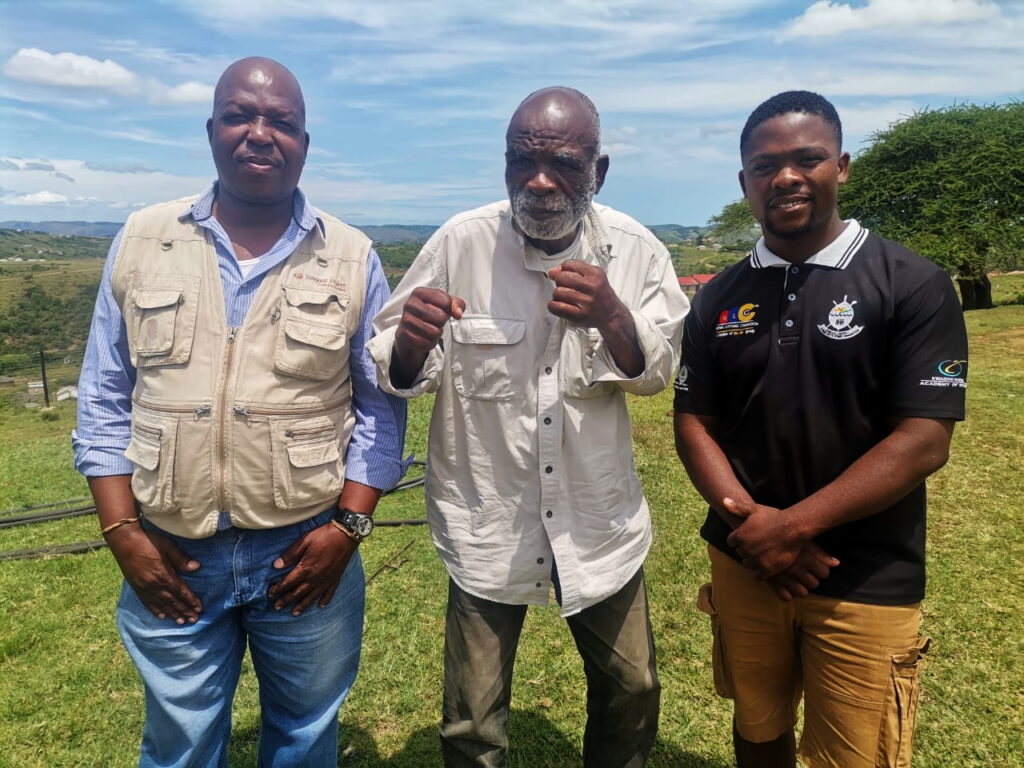
Tap Tap’s home is on the famous P230 road in Habeni. His general dealer and bottle store are also on the same road.
His home is a short walk from the grave of Queen Nandi, mother to late Zulu King Shaka ka Senzangakhona.
A few kilometres down the road from Tap Tap’s home stands KwaBulawayo which was King Shaka’s headquarters during his reign. It is now a tourist attraction under the Umlalazi local municipality.
KwaBulawayo was founded during King Shaka’s conquest of the Ndwandwe kingdom, around 1820.
Tap Tap was treated like royalty during his reign. His trainer and promoter, Chin Govender, managed to secure him the biggest paycheck in his boxing career, a R10 000 reward for agreeing to fight Charlie Weir at the peak of his career.
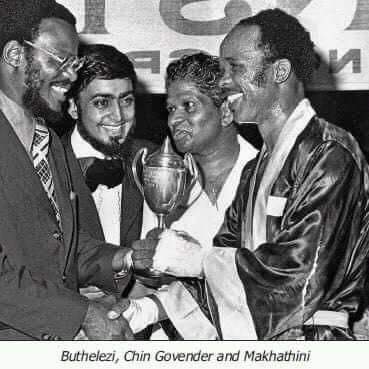
After turning professional at the age of 29 in 1971, and working with his first time trainer and promoter Govender, Tap Tap earned R2 for each round in his bouts.
In his professional debut fight Tap Tap beat one of the feared boxers of the time, Phuthuma Khuboni on a technical knockout (TKO) in the 5th round.
According to Ring Magazine, that same year, Tap Tap was unstoppable. He beat a string of boxers – from Abram Sibeko, Wilfred Dlamini, Derrick Mncwango, Maxwell Malinga, Joe Joka, Henry Sedumo, Jethro Luhlongwane, Gordon Goba, John Fighter and Joseph Hali.
He says his opponents never lasted the scheduled 10 rounds as he floored most of them.
Tap Tap became a black champion in 1972 during the days of racially segregated sport at the height of Apartheid.
At the height of his reign in the 70s Tap Tap won 12 fights in a row.
In 1973 he upped his ante when he fought overseas boxers. Two of his victims were Americans, Willie Warren and Billy Douglas.
However, in January 1974, Tap Tap lost to Hoho again when he challenged him for the SA middleweight title.
The fight was stopped in the 11th round as a result of a bad cut above Tap Tap’s eye.
More international fights beckoned as Tap Tap beat Brazilian Juarez de Lima in 1974. The first multi-national fight, which took place on August 17, 1974, was held at the Rand Stadium in Johannesburg.
The international bout was promoted by Maurice Toweel.
The bill also featured Norman “Pangaman” Sekgapane against Jorgen Hansen, Kokkie Olivier fought against Roger Zami and Pierre Fourie faced Tom Bogs.
On August 9, 1975, Tap Tap beat former world welterweight and middleweight champion Emile Griffith at a tournament held at the Orlando Stadium in Soweto. Later on he also beat the American import Manuel Fierro and also drew with Joseph Hali, but lost on points to Carl Speare of England.
In 1976 the country was on fire due to student uprisings that engulfed the country.
It was the same year Tap Tap knocked out Victor Ntloko in the 7th round to win the Old Buck belt as SA black middleweight champion in Durban, Natal.
Then in November 1976, Tap Tap went to fight Jan Kies, a white boxer at the Rand Stadium in Johannesburg in a ground breaking fight that saw boxers competing across the colour line.
In attendance at the match, was one Piet Koornhof – an Apartheid cabinet minister. Tap Tap made light work of Kies, knocking him out in the third-round.
Tap Tap became South Africa’s first undisputed national middleweight champion and was known as the “The People’s Champion.”
“I was the people’s champion because I was known in many communities. I had fights in Stanger, Empangeni, Durban and I was also fighting in the Transvaal (now Gauteng). People loved me,” recalls Tap Tap.
His only loss that year was to an experienced American, David Love, who beat him on points over 10 rounds.
According to SuperSport, the first two multiracial South African title fights were held at the Rand Stadium on November 27, 1976, with heavyweight boxer Gerrie Coetzee and Tap Tap becoming the new undisputed champions.
While Tap Tap beat Kies, the black heavyweight title champion, James Mathato was knocked out in the seventh round by Coetzee. Tap Tap successfully defended the title twice in 1977. The following year he lost the title to Doug Lumley in Durban.
He then fought Lumley a second time and lost again.
He still can’t believe how he lost to Lumley after putting him on the canvas twice during their first fight.
Like a true warrior, he continued to deliver his signature southpaw punches to seven of his opponents. This was before his memorable fight which earned him a big payday against Charlie Weir in 1979.
“Charlie Weir had to fight an overseas boxer, but he (the overseas boxer) got injured. So I had to become his replacement since the tickets for the match were already sold out,” Tap Tap recalls.
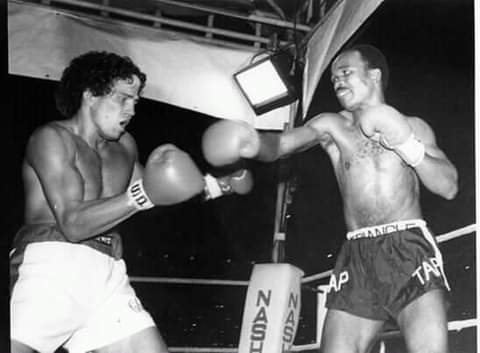
“I remember Chin Govender came to see me at home at about 8pm on a Friday with the promoter to ask me to replace the injured boxer.”
Tap Tap says normally he needed 30 days to prepare himself for a fight, but this one was different.
“The fight was taking place on a Wednesday night at King’s Park Stadium, and the promoter came to me on the Friday to offer me the fight. I told him to give me at least seven days to get myself into shape,” Tap Tap remembers.
“Since I was always jogging and had enough stamina, I then decided to put my body into shape by chopping wood. I also focused on skipping the rope to be in tip top shape,” says the former pugilist who regarded himself as a slow starter.
Tap Tap knocked out Weir in the third round but was worried that he required several minutes of medical attention before he could be on his feet.
“I became worried after I floored him. I thought I may have broken his jaw or damaged his brain. But he was fine because after that, a few months later, we were involved in an exhibition fight,” says Tap Tap.
He is still bitter and feels he was short-changed for being paid R10 000 for being a replacement fighter in their first bout.
He says he should have been given the same R40 000 purse like the injured overseas fighter had been promised.
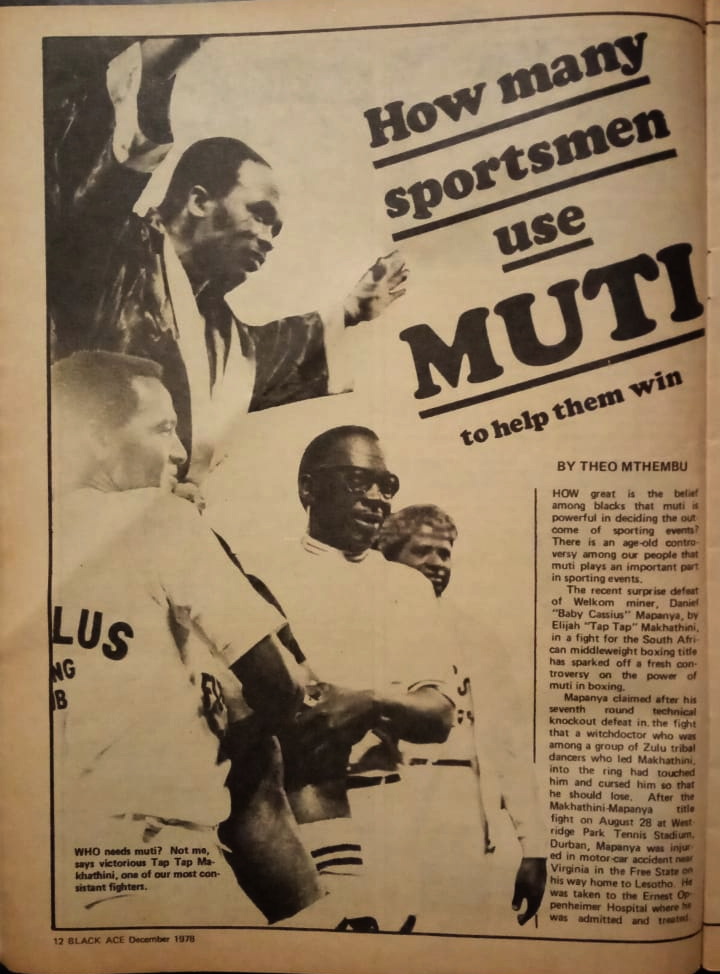
Another boxer who felt the wrath of Tap Tap’s left hook was Daniel Mapanya. He beat him for the Old Buck title at the Mayville Tennis Court in Durban in 1978.
Tap Tap says he had a score to settle with Mapanya after he vowed to he was going to floor him during their weigh-in session.
While Mapanya was talking big at the weigh-in session, Tap Tap had a small army dressed in Zulu regalia which accompanied him to the ring on fight night.
The army was chanting Zulu war cries that spurred on Tap Tap. Inspired by the battle cries Tap Tap knocked Mapanya out cold in the seventh round.
One of the battles that Tap Tap remembers vividly, was when he fought champion Maxwell Malinga in the Junior Middleweight division at Durban’s Curries Fountain.
“We beat each other like nobody’s business that day. I eventually won the bruising fight,” he says of their second fight were he avenged his first defeat.
Maxwell Malinga, who became a boxing trainer after retiring, is the uncle of former world champion Thulani “Sugarboy” Malinga.
Meanwhile, after a fourth round knockout win over American Gary Guiden, Tap Tap travelled to Monte Carlo for his first-ever fight outside South Africa to face Alfredo Cabral of Argentina on June 30, 1979.
Ring Magazine says the fight was stopped, controversially, after 2 minutes and 54 seconds by British referee Roland Dakin.
Tap Tap and Chin Govender complained bitterly saying the South African was fully conscious and he had not been given the benefit of a count before being declared a loser.
However, during the main fight, Tap Tap’s compatriot Gerrie Coetzee beat former world champion Leon Spinks with a stunning 123-second knockout. Spinks had beaten Muhammad Ali before that fight in Monte Carlo.
In his next two fights, a not so sharp Tap Tap was knocked out in two rounds by Bruce McIntyre and beaten on points over eight rounds by Terrence Makaluza.
After losing to Daniel Mapanya and being outpointed by Lumley on May 19, 1980, Tap Tap hung up his gloves.
Earlier in life, when he was still an amateur in 1966, Tap Tap missed out on a trip to Australia where only winners went on to fight with other boxers in 1967.
Before turning professional in February 1971, Tap Tap had beaten almost all his opponents at different tournaments in the former Orange Free State, Pretoria, Johannesburg, Durban, Empangeni and Stanger amongst some venues.
Tap Tap was the second born from a family of nine children, seven girls and two boys.
He was born on September 3 1942, to the late Gladys Zakwe, nee Xulu and Ntandela Xulu.
His mother, Gladys, didn’t encourage him to attend school since he had to look after the family’s livestock.
“I didn’t finish school since I had to look after the family’s livestock. I went to school until Standard 1 (Grade 3). When other kids went to school, I would always cry and wanted to attend class as well,” he says.
On weekends, kids his age played different sporting codes like stick fighting, soccer, gambling and boxing.
His (now late) grandfather, Nkesentsha “Mkhulu Go-One” Xulu, told him stories about local and overseas boxers.
“Mkhulu Go-One” listened to the radio to learn about boxing, as well as the popular boxers at the time,” says Tap Tap.
He told him that during his time local boxers used to tie a bag on the tree and stuff it with sand or old corn cobs, and then proceeded to train with it.
Tap Tap then decided to be more creative by following the same strategy stuffing the bag with cow dung. That’s where he learned his boxing skill. He fought as an amateur in the hills and valleys of Habeni and knocked out every opponent that came his way.
With no formal education, Tap Tap went to Umlaas Road to look for work aged 18. At the time, his father worked at a railway station in Durban.
The following year, in 1961, when the Union of South Africa obtained its independence from Britain on May 31, Tap Tap moved to Durban to seek greener pastures.
He stayed at the infamous Point Road in Durban. While there, he joined a boxing club at New Ark Railway. The following year he moved to Stanger on the north coast to look for better job offers.
In 1964, Tap Tap moved to Shakaskraal to work at a sugarcane plantation.
He was hired with two of his friends at the plant, and within a day of working there, the trio was fired.
He continued with his fledging boxing career as an amateur.
In 1966, he moved to Stanger, what is today known as KwaDukuza to work at a railway construction company.
Luckily, he never abandoned his favourite pastime – boxing. He found a more organised gym where he fought regularly and toured across the country with fellow stablemates.
Tap Tap resigned from his day job on the railway lines in 1974 and opened up his first general dealer shop in Stanger.
After retiring as a super middleweight in 1980, Tap Tap had saved enough money to open a general dealer and bottle store on the famous main road, P230, in Habeni, outside Eshowe.
Both shops bear his famous nickname, Tap Tap, and so is his boxing academy, which is led by one of his many sons, Cebiso Xulu.
The young Xulu is also the secretary of Tap Tap Tap Tap Foundation.
When Tap Tap hung up his boxing gloves in 1980, he had an impressive record of 47 wins, 13 losses and two draws in a professional career spanning nine years.
Most of his wins were through knockouts.
He still feels bitter that he lost two fights to Doug Lumley on points.
He feels he was a strong boxer in his boxing career – both as an amateur and professional – since none of his opponents knocked him out.
Meanwhile, he operated his shops under difficult conditions where he was required to have licences.
At times police would raid his bottle store as a way of intimidating him.
During the first democratic elections o 1994, Tap Tap was still active in boxing – training young boxers.
So it came as no surprise when former President Thabo Mbeki honoured him with the Order of Ikhamanga – Silver – for his achievements in SA boxing in 2004.
In 2007, Tap Tap was inducted to the SA Sport Hall of Fame.
He earned the nickname Tap Tap from his roommate Vincent Mgenge.
“At work we had a soccer team and a boxing club. We supported each other’s sporting careers. When I went to fight one day, Mgenge asked me how I would defeat my opponent. I told him it was an easy task to do.
“Since I had a tape measure all the time, I took it out and used a chalk to draw a sketch on the floor. In the ring I depicted myself, my opponent and the referee in the middle. When the fight started that night, Mgenge was in the crowd and started shouting, ‘Tape, Tape, Tape, Tape!”
While Mgenge was reminding Tap Tap to use the tape strategy to beat his opponent, the crowd cheered him on saying, Tap Tap!
That’s how the nickname Tap Tap stuck.
When Covid-19 broke out in 2020 and the country was placed under lockdown, his businesses, like thousands of others suffered a huge loss.
The bottle store suffered heavily when liquor was banned. And his son, Cebiso also suffered because Tap Tap Boxing Academy couldn’t stage any tournaments due to Covid-19 restrictions.
When the restrictions were lifted, there had to be no fans to watch the fights and no physical contact amongst boxers was allowed.
But Cebiso is grateful that one of the matches he promoted was televised online on 1KZN and SABC Sports.
While he enjoys playing with his grandchildren, Tap Tap’s two daughters, Thuli and Nompilo are helping with the family businesses, although Nompilo has her own business to take care of. The flashing lights and pounding of gloves are now just hazy memories for this doting grandfather. – news@mukurukuru.co.za

Be First to Comment